


 Sign In
Dominant 3rd House in the Natal Chart
The 3rd House is the area of the natal chart that places the individual in direct contact with their immediate environment. It concerns how we observe, understand, and convey information, and it takes very different forms in Jim Carrey, Jean-Jacques Goldman, Hans Christian Andersen, and Meghan Markle, the four examples selected for this article. It describes practical intelligence, curiosity, language, writing, speech, and the exchanges that shape everyday experience. When it ranks high among the dominants of the chart, the need to grasp, communicate, learn, or remain connected with one's immediate surroundings tends to become a driving force. A dominant 3rd House does not necessarily mean that someone talks a great deal. Above all, it indicates that the circulation of ideas, words, knowledge, or contacts plays a structuring role in the personality and overall trajectory.
Among the twelve astrological houses, the 3rd House is a cadent house. Rather than acting through the immediate assertive force associated with angular houses, it operates through adaptation, learning, and connection. It opposes the 9th House, and together they form the axis of knowledge and our view of the world. The 3rd House gathers, compares, names, and circulates information drawn from everyday experience; the 9th tends instead to organize it into a broader vision, extending it toward higher education, major syntheses, beliefs, and wider horizons. Similarly, the 3rd House is associated with short or routine trips, while the 9th concerns journeys that take us beyond familiar surroundings. This opposition does not separate two competing forms of intelligence. Rather, it distinguishes the acquisition and handling of information from its integration into a more comprehensive perspective. A dominant 3rd House often favors mental agility, closeness to facts, the ability to move from one subject or interlocutor to another, and an interest in what lends itself to observation, analysis, or communication.
Early intellectual development also belongs to this house. It describes our relationship with basic schooling, reading, writing, vocabulary, information gathering, and the processes through which the mind organizes what it discovers. A strong 3rd House can foster an attraction to books, the press, teaching, journalism, conversation, or any activity requiring ease in handling signs and messages; the configurations of the chart determine the quality and form of these abilities. An interest in languages is one possible expression, but by no means a necessary one. The 3rd House also encompasses siblings, childhood peers, neighbors, and the people regularly encountered in everyday life. When it is dominant, brothers and sisters or the immediate circle can play a considerable role, as sources of closeness, stimulation, collaboration, or, conversely, rivalry and tension. As always, a dominant indicates the importance of an area of life, not its favorable or unfavorable nature. A powerful 3rd House guarantees neither academic success nor eloquence nor harmonious family relationships.
Mobility is another essential dimension of its symbolism. Daily commutes, local business travel, frequent changes of place within the same area, vehicles, routes, and the means that make movement easier all belong to its domain. For some people, a dominant 3rd House translates into a highly mobile life filled with appointments, encounters, and constant back-and-forth trips; for others, the motion is primarily intellectual and appears as a succession of interests, projects, or interlocutors. The notion of correspondence must likewise be understood in a broad sense. The letters and mail of traditional astrology have been joined by telephone calls, electronic messages, and the many forms of instant communication. The 3rd House describes less the social or collective reach of a medium than the very process of sending, receiving, and circulating information. It can therefore be prominent in writers, teachers, journalists, broadcasters, salespeople, interpreters, or transportation professionals, but also in anyone whose work depends on the smooth flow of exchanges, connecting people, or the practical transmission of knowledge.
In terms of personality, a dominant 3rd House can heighten curiosity, mental flexibility, powers of observation, ease in forming contacts, and the capacity to adapt quickly to different situations. It often strengthens the need for intellectual stimulation and the pleasure of learning through interaction with others. Depending on the planets involved and their configurations, this liveliness can become eloquence, literary flair, humor, a gift for memorable turns of phrase, teaching ability, or an aptitude for rendering complex subjects accessible. It can also emerge in a very reserved individual who prefers to communicate through writing, creative work, or the transmission of knowledge rather than through public exposure. In its less constructive expressions, the same dominant can encourage scattered interests, intellectual impatience, nervousness, excessive talking, a tendency to share confidences too freely, frequent changes of focus, or an accumulation of information without always exploring it in depth. Challenging aspects can also place the emphasis on misunderstandings, hurtful words, sibling conflicts, problems at school, or marked instability in the everyday environment. Above all, the 3rd House amplifies the need to exchange and connect; how this need is experienced depends on the rest of the chart.
Interpreting a dominant 3rd House requires close examination of the planets occupying it, the sign on its cusp, the ruler of that sign, its placement and aspects, as well as the role of Mercury in the chart as a whole. Luminaries or personal planets located in this sector can make communication, learning, or the immediate circle essential components of identity; Saturn brings greater rigor or restraint, Uranus independence and speed, Neptune imagination or receptivity, while Pluto can intensify the impact of words and exchanges. A repetition of the same symbolism through the ruler of the 3rd House, a dominant Mercury, Air signs, or tight aspects further reinforces its importance. By analogy between signs and houses, the 3rd House is associated with Gemini and Mercury, with which it shares curiosity, mobility, and a taste for exchange. This correspondence remains a symbolic affinity rather than an equivalence, since the 3rd House is first and foremost a field of experience. When it is dominant, learning, connecting, articulating, transmitting, and moving through familiar surroundings become, in one way or another, recurring themes around which a significant part of life is organized.
Note: This article focuses specifically on house dominance and is therefore not intended as a complete psychological analysis of the personalities selected as examples. Other articles about these personalities can be found in our Celebrity Focus section.
Jim Carrey or the 3rd House in Motion

Few careers illustrate the possibilities of the 3rd House as directly as that of Jim Carrey, whose 3rd House reaches a strength of more than 48%. Born on January 17, 1962, in Newmarket, Ontario, he discovered very early that he could attract attention through impressions, grimaces, and extraordinary facial mobility. As a teenager, he was already performing as a comedian, then honed his craft throughout the 1980s before gaining wider recognition on the television show In Living Color. In 1994, Ace Ventura, The Mask, and Dumb and Dumber propelled him within months into the ranks of Hollywood's biggest stars. Speech matters in his performances, but his body, timing, facial expressions, and instantaneous shifts in tone also function as means of communication in their own right.
The astrological concentration is particularly striking. The Sun, Mercury, Venus, Jupiter, and Saturn are all located in the 3rd House. The cusp of this house is in Capricorn, and its ruler Saturn is itself placed in the same sector, further reinforcing its importance. Mercury and Jupiter are conjunct within an orb of 0°32 in Aquarius and in the 3rd House. This Mercury-Jupiter conjunction combines mental quickness, amplification, a taste for exaggeration, and ease in conveying ideas. The Moon in Gemini, the sign associated with the 3rd House, forms a trine to Mercury at 2°28 and another to Jupiter at 3°.
His formative years nevertheless show that a dominant 3rd House does not necessarily imply an easy or conventional academic path. When his family encountered severe financial difficulties, Carrey left school at sixteen and joined them in factory work. Saturn, ruler of the 3rd House and placed in the 3rd, gives a more demanding tone here to the sphere of education and intellectual development. His real training came less through diplomas than through observation, repetition, and direct experience with an audience. He learned to gauge a reaction, alter a voice, reproduce a mannerism, and identify within seconds the detail that would trigger laughter. His sense of humor was thus honed from a young age, far removed from the image of a purely spontaneous gift requiring no effort.
The breakthrough of 1994 shows how far this 3rd House can go when it finds its means of expression. In Ace Ventura, The Mask, and Dumb and Dumber, Carrey established a style based on speed, abrupt shifts in tone, improvisation, and constant transformation. His face seems to possess a vocabulary of its own, and the slightest gesture becomes meaningful. Mercury and Jupiter in Aquarius are consistent with this tendency to push an idea to the point of absurdity, to surprise, and to invent a comic language that is instantly recognizable. The Moon in Gemini adds flexibility and responsiveness. Taken together, these factors account for his talent more convincingly than an interpretation limited to his Capricorn Sun or his Scorpio Ascendant, two placements which, considered alone, would explain this extraordinary expressive mobility far less effectively.
His success in dramatic roles also confirms that this communicative power extends well beyond farce. The Truman Show, Man on the Moon, and Eternal Sunshine of the Spotless Mind reveal an ability to shift registers and convey emotion through much more restrained means. The trine between the Moon and Mercury facilitates this flow between feeling and expression, while the Mercury-Neptune square, exact within 1°26, introduces a more complex relationship between perception, imagination, and reality. With Neptune conjunct the Ascendant, the ability to merge with a character and temporarily blur his own image takes on additional importance. His two Golden Globe Awards for The Truman Show and Man on the Moon show that this versatility can also serve a much more inward style of performance.
This ability to shift from one expressive language to another helps explain the longevity of his career. After the major comedies of the 1990s and 2000s, Jim Carrey appeared less often but continued to explore new registers, including the series Kidding and the exuberant Dr. Robotnik in the Sonic the Hedgehog films. He also turned to painting and writing, publishing a children's book and a novel, natural extensions of a 3rd House this prominent. The medium changes, but the need to produce signs, images, words, or characters remains. For him, communication is less about delivering a single, consistent message than about multiplying the forms capable of provoking a response in others.

Dominant houses diagram for Jim Carrey
With Jim Carrey, the 3rd House appears in a particularly spectacular form. Five planets are concentrated there, including Saturn, the ruler of this house, while Mercury forms an almost exact conjunction with Jupiter, supported by the Moon in Gemini. This configuration gives exceptional importance to the processes of learning, observation, adaptation, and, above all, expression. What makes him distinctive is the way he has extended communication far beyond words, turning his face, voice, and entire body into instruments of language. From the teenager honing his impressions to his most extravagant comic characters and then to the dramatic roles that revealed a very different range, the same thread remains. Here, the 3rd House describes an intelligence in motion that seems constantly compelled to invent a new way of making itself understood.
Jim Carrey


You can also consult the astrological portrait of Jim Carrey.
Below is Jim Carrey's birth chart:
Jean-Jacques Goldman or the 3rd House Between Creativity and Reserve

At first glance, Jean-Jacques Goldman might seem a paradoxical choice to illustrate a dominant 3rd House. Few French public figures have been as consistent in shunning media exposure and protecting their private life. Yet, born on October 11, 1951, in Paris, he built a career almost entirely on words, music, and communication. Beginning in the early 1980s, songs such as Il suffira d'un signe, Quand la musique est bonne, Je te donne, and Là-bas established him as a singer-songwriter capable of reaching an enormous audience without cultivating a spectacular public persona around himself. His fame rests less on self-exposure than on a remarkable ability to put emotions and experiences into words in which millions of listeners can recognize themselves.
The structure of the chart powerfully reinforces this orientation. The Sun, Mercury, Saturn, and Neptune are all located in the 3rd House, forming a true stellium in Libra. Even more tellingly, his top three planetary dominants are precisely the Sun, Neptune, and Mercury, all three placed in this sector. The cusp of the 3rd House is in Virgo, and its ruler Mercury is itself found there. With Leo rising, its ruler, the Sun, also falls in the same house. The two principal rulership pathways in the chart therefore converge on expression, writing, exchange, and the shaping of ideas.
Goldman's creative work makes this concentration particularly clear. The Sun and Mercury are in conjunction within 1°56, linking identity and thought, while the Sun-Neptune conjunction within 2°19 connects personal sensitivity with imagination and artistic inspiration. Mercury also forms a nearly exact square to Uranus, with an orb of 0°58. This tension can accompany a mind quick to find an unexpected turn of phrase, a shift in rhythm, or an original association. Goldman does not merely perform his songs. He writes the lyrics, composes the music, works on the arrangements, and has long been interested in studio work, thereby multiplying the forms taken by the same creativity.
Alongside his own body of work, another expression of the 3rd House emerges: writing for other people's voices. Goldman writes and composes for Johnny Hallyday, then develops an exceptional collaboration with Céline Dion that produces D'eux, which became the best-selling French-language album in history. For several years, he works with Michael Jones and Carole Fredericks as Fredericks Goldman Jones. Even the realm of siblings, traditionally associated with the 3rd House, finds a powerful echo in his life. His older half-brother, Pierre Goldman, an activist and writer whose life ended tragically, left a deep mark on the family history, while his younger brother Robert Goldman, a songwriter who works under the pseudonym J. Kapler, also became his manager and close collaborator. For Goldman, creativity thus often develops through dialogue, partnerships, and the circulation of ideas rather than in complete isolation.
His involvement with the Restos du Cœur gives this gift for communication a collective dimension. At the request of Coluche, Goldman writes La Chanson des Restos in 1985, and it immediately becomes the organization's anthem. He then joins the first group of Enfoirés and, together with Véronique Colucci, plays an essential role in launching the concerts from 1989 onward. For many years, he contributes to their conception, song selection, and artistic organization before leaving the group in 2016. Here, the 3rd House is no longer limited to the expression of an individual talent. Words and music become tools for bringing people together, capable of placing immense fame at the service of concrete action.
The most striking contrast, however, remains between this formidable power of communication and his legendary discretion. After withdrawing from the stage in the early 2000s, Goldman greatly reduces his public appearances, declines almost all media requests, and leads a family life far removed from celebrity culture. Saturn in the 3rd House fits well with this filtered, deliberate, and sparing style of communication, while its sextile to the Ascendant, within 1°26, can reinforce a controlled and understated presentation of self. This reserve has done nothing to weaken his bond with the public. In December 2025, more than two decades after his withdrawal, he still topped the ranking of France's favorite personalities for the ninth consecutive year. His 3rd House thus seems to operate according to a singular rule: communicating a great deal while revealing as little of himself as possible.

Dominant houses diagram for Jean-Jacques Goldman
Rarely has the 3rd House combined creativity, writing, and mastery of communication so clearly. Four planets are located there, his top three planetary dominants are found there as well, along with the ruler of this house and the ruler of the Ascendant. Mercury conjunct the Sun places words at the heart of identity; Neptune adds sensitivity and inspiration, while Saturn introduces the restraint that sets Goldman apart from so many equally popular artists. His life thus shows that a powerful 3rd House does not imply excessive talking or a constant search for visibility. It can just as readily belong to someone who writes extensively, composes for himself and for others, brings people together through his songs, and then chooses to step back behind what he has created.
Jean-Jacques Goldman


You can also consult the astrological portrait of Jean-Jacques Goldman.
Below is Jean-Jacques Goldman's birth chart:
Hans Christian Andersen or the 3rd House in the Service of Enchantment
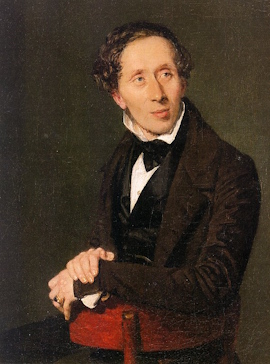
Long before emerging as one of the world's most widely read storytellers, Hans Christian Andersen grew up in modest circumstances in Odense, where he was born on April 2, 1805, to a shoemaker and a washerwoman. At fourteen, he left alone for Copenhagen hoping to pursue a career in the theater, before realizing that literature was his true means of expression. The 3rd House ranks first among his dominant houses, aptly reflecting a life devoted to words, stories, observation, and transmission. Novels, plays, poems, travel writing, and above all fairy tales would form a prolific body of work, some of which has now been translated into more than a hundred languages.
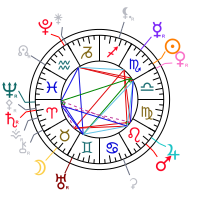
Astrologically, this orientation rests first on three planets gathered in the 3rd House. The Sun and Mercury are in Aries, while Venus is in Pisces. The Sun and Mercury form a very close conjunction with an orb of 1°22, tightly linking thought and expression with identity. The cusp of the 3rd House is itself in Pisces, and Venus there makes an almost exact trine to Neptune, within 0°37. The combination is highly suggestive in a writer who gave simple, sensitive, and poetic language to worlds in which reality continually slips into enchantment.
His education, however, was far from smooth. After his first attempts to establish himself in Copenhagen, patrons enabled him to resume his studies, but the years he spent in Slagelse and later in Elsinore left him with painful memories. He was even discouraged from writing during this period. In the chart, Mercury forms a precise opposition to Saturn, with an orb of 0°18, while the Sun also opposes Saturn within 1°04. Without reducing his educational difficulties to a few aspects, this configuration reflects the coexistence of an urgent need for expression and a learning process marked by constraint, criticism, and discipline. What might have inhibited his voice helped structure a literary vocation of remarkable persistence.
The strength of his writing lies in his ability to begin with a very simple situation and give it a much broader significance. The Princess and the Pea, The Little Mermaid, The Snow Queen, and The Little Match Girl use accessible language while exploring desire, difference, loneliness, sacrifice, poverty, and the search for love. This ability to make complex emotions intelligible fits well with a 3rd House occupied by several planets. His literary work was by no means limited to children's fairy tales. Andersen also wrote novels, plays, poetry, and several autobiographical books, as though the same need to tell stories continually had to find new forms.
As his reputation grew, another major emphasis in the chart came fully into focus. The 9th House ranks second, and Andersen traveled for more than forty years throughout much of Europe, as well as to Asia Minor and North Africa. He often transformed these journeys into written material and sometimes gained international recognition more quickly than he did in Denmark. His Sagittarius Ascendant is ruled by Jupiter, which ranks first among his planetary dominants. The 3rd House tells the story while the 9th broadens the horizon, allowing tales born in very modest surroundings to travel far beyond their original language and era.

Dominant houses diagram for Hans Christian Andersen
Two centuries after his birth, the enduring power of his fairy tales reveals the full significance of this dominant 3rd House. The Sun, Mercury, and Venus bring identity, thought, and sensitivity together in this sector; the Sun-Mercury conjunction further strengthens the link with writing, while Venus in Pisces connected with Neptune gives language its imaginative and poetic dimension. Andersen did more than create enchanting tales. He found a way of telling them that is clear to children yet rich in nuance for adults. Here, the 3rd House appears as the art of capturing an experience, an emotion, or a detail of everyday life and transforming it into a story capable of reaching everyone.
Hans Christian Andersen


You can also consult the astrological portrait of Hans Christian Andersen.
Below is Hans Christian Andersen's birth chart:
Meghan Markle or the 3rd House at the Heart of Her Public Voice

From childhood, Meghan Markle displayed remarkable confidence in the power of words. At eleven, disturbed by a dishwashing liquid commercial that associated household chores exclusively with women, she wrote to the manufacturer, Procter & Gamble, asking for the message to be changed. The story attracted the attention of the television program Nick News, and the wording of the advertisement was subsequently revised. Born on August 4, 1981, in Los Angeles, she would go on to become an actress, activist, member of the British royal family, producer, podcaster, and entrepreneur. Behind these changes in status, one thread remains constant: communication and control over her own narrative. Her 3rd House, the strongest house in the chart at nearly 50%, corresponds remarkably well with this continuity.
The astrological structure is particularly coherent. The Moon, Venus, Jupiter, and Saturn are all located in the 3rd House. The Ascendant is in Cancer, and its ruler, the Moon, ranks first among the planetary dominants while also being placed in this house. Conversely, the cusp of the 3rd House is in Virgo, whose ruler Mercury is in the 1st House. A genuine exchange is therefore established between identity and communication. The ruler of the Ascendant leads toward the 3rd House, while the ruler of the 3rd returns to the personality and the way it presents itself.
This circulation is reinforced by several remarkably precise aspects. Mercury in Leo forms a sextile to Saturn within 0°15, a sextile to the Moon within 0°41, and a sextile to Jupiter within 1°04. Personal thought is thus connected with three of the four planets located in the 3rd House. The Moon, Jupiter, and Saturn are themselves grouped in Libra, with less than two degrees separating them. Her expression can therefore combine emotional engagement, a desire to broaden the conversation, and an effort to shape the message carefully. For Meghan Markle, communication rarely remains trivial. It often means defending a position, presenting her own account of an experience, or turning a personal situation into a matter of wider relevance.
Long before joining the royal family, this disposition could already be seen in several activities alongside her acting career. After a number of roles, she gained significant recognition through the television series Suits, in which she played Rachel Zane from 2011 to 2018. In 2014, she also created the website The Tig, devoted to travel, food, fashion, and personal reflections, while speaking publicly in support of gender equality. The actress was therefore already doing more than performing texts written for her. She wrote, published, spoke publicly, and used her visibility to promote themes of her own. This diversification fits well with a 3rd House that favors movement between several forms of expression rather than confinement to a single role.
Her marriage to Prince Harry in 2018 dramatically changed the scale of this exposure. As Duchess of Sussex, Meghan took part in official royal engagements before the couple decided in 2020 to step back as senior working members of the royal family and settle in North America. A period of intense media tension followed, in which communication itself became a central issue. The choice of greater personal freedom did not lead to withdrawal from public life. On the contrary, the Sussexes increasingly favored platforms and productions that allowed them more control over how their story was told.
The March 2021 interview with Oprah Winfrey provides the most spectacular example of this new communication strategy. Harry and Meghan presented their own account of their experience within the royal family to a vast international audience. Without taking sides in the controversies generated by their statements, the episode shows how the act of speaking publicly became an event in itself. The Netflix documentary Harry & Meghan, released in 2022, continued along the same path by giving the couple several hours in which to tell their story. That same year, Meghan launched the podcast Archetypes, built around conversations with public figures and experts about the labels applied to women. The 3rd House is expressed here through interviews, dialogue, testimony, and media communication.
This high level of exposure has generated sharply contrasting reactions. Admirers and critics alike comment on her statements, her choice of words, her interviews, and even the way she manages her public image. Pluto square the Ascendant within 2°26 can accompany a presence that attracts intense projections and power struggles over how people perceive her. It would be excessive to conclude from this that Meghan Markle actively seeks the controversies that surround her. Her trajectory does show, however, that she repeatedly returns to public communication when others present an account of her life or character that differs from her own. Productions developed through Archewell, followed by projects such as With Love, Meghan, further extend this determination to maintain independent channels of expression.

Dominant houses diagram for Meghan Markle
Meghan Markle's trajectory offers a contemporary illustration of a dominant 3rd House. Four planets are gathered there, the ruler of the Ascendant is located there and dominates the chart as a whole, while the ruler of the 3rd House occupies the 1st House and connects with almost the entire group through three precise sextiles. From the letter she wrote at eleven to interviews, blogging, podcasts, and audiovisual productions, words have held an exceptional place in her life. For her, communication also means shaping an image, explaining, persuading, and reclaiming control of a narrative. The media spotlight surrounding this public voice may be favorable or hostile, calm or turbulent, but it keeps personal expression at the center of her path.
Meghan, Duchess of Sussex



You can also consult the astrological portrait of Meghan Markle.
Below is Meghan Markle's birth chart:


 Title
Section
Title
Section