


 Sign In
Dominant 12th House in the Natal Chart
The 12th house holds a singular place in astrological interpretation, as it refers to everything that operates in depth, away from immediate view. When it becomes dominant in a natal chart, it often points to a personality inhabited by an intense inner life, sensitive to atmospheres, unspoken currents, secrets, and the invisible dimensions of existence, as illustrated by the charts of Queen Victoria, Pierre Teilhard de Chardin, Frank Ocean, and Arthur Conan Doyle.
This house is traditionally associated with hidden trials, concealed enemies, diffuse troubles, isolation, and renunciation. However, it should not be understood only in a negative light, for it also describes the ability to withdraw from the noise of the world, mature in silence, turn vulnerabilities into lucidity, and develop a form of wisdom born of distance.
A strong 12th house can bring a need for solitude, discretion, or psychic protection. The individual does not always reveal easily what they feel, and an important part of their personality may remain secret, even to those close to them. This reserve can nourish a creative work, a spiritual vocation, a humanitarian commitment, a research activity, or any path requiring depth, patience, and internalization.
This house relates as well to places or situations separated from ordinary life, such as hospitals, prisons, monasteries, institutions, backstage settings, voluntary retreats, or periods of exclusion. When the 12th house dominates the natal chart, these symbols may manifest concretely, but also psychologically, through the feeling of carrying part of one's destiny on the margins, in an inner space that is difficult to share.
On a higher level, the 12th house favors compassion, self-effacement, the ability to hear silent suffering, and the perception of invisible bonds between beings. In analogy with Pisces, it invites one to move beyond the usual boundaries of the ego and access a broader understanding, sometimes mystical, artistic, or healing.
When well integrated, this dominant does not condemn anyone to solitude or hardship. On the contrary, it can become a remarkable source of inspiration, lucidity, and inner strength, provided that withdrawal does not turn into escape and secrecy does not lead to confinement. Its richness is often born of a paradox, for it is far from the tumult that the person finds their true power.
Note: this article focuses specifically on astrological dominance and does not constitute a full psychological analysis of the individuals discussed. For more detailed studies, additional articles are available in the focus section.
Queen Victoria, or the 12th House as Withdrawal, Duty, and Inner Power
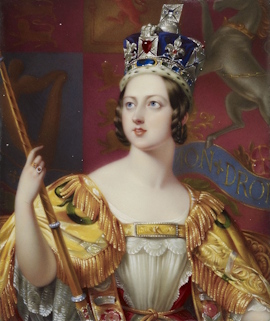
Queen Victoria, born in 1819, remains one of the most famous figures in British history. Her exceptionally long reign, her role in the expansion of the Empire, and the lasting imprint of the Victorian era make her a major example of public destiny. Yet her natal chart reveals an overwhelming 12th house, with about 71% dominance, allowing us to approach in her case the hidden, solitary, and internalized side of power.
The most striking factor is the accumulation of five personal planets in the 12th house. The Sun, the Moon, Mercury, Venus, and Mars are all placed there, which sets identity, sensitivity, thought, affectivity, and active energy in a zone of withdrawal, secrecy, and inner maturation. Such a concentration does not merely describe a private life protected from view. It suggests a personality whose decisions, attachments, and deeper reactions take shape in an intimate space, long invisible, before appearing in the official sphere.
The Sun-Moon conjunction in Gemini, also in the 12th house, reinforces this sense of a dense, mobile, observant psychic core that is difficult to grasp directly. Since both luminaries are close to the Ascendant, what is hidden is not absent from the outer image. On the contrary, the sovereign can give the impression of a very personal presence, but one controlled, filtered by rank, protocol, modesty, and an acute awareness of what must remain behind the curtain.
The 12th house begins in Aries, and Venus and Mars are both placed in this sign. This position adds an interesting tension, as impulse, desire, assertion, and will are not expressed directly or spontaneously. They pass through duty, restraint, the constraints of office, and invisible loyalties. In Victoria's case, Aries energy does not disappear, but concentrates into a silent, sometimes inflexible determination that can assert itself quietly and weigh durably on those around her.
The aspects further nuance this dominant. The Sun and Moon trine the Midheaven show that this inner life is not cut off from public destiny, but instead nourishes authority and historical stature. The sextiles from the luminaries to Saturn and Pluto indicate a capacity to endure, to hold firm, and to embody an almost institutional continuity. Thus, the 12th house does not manifest only through mourning, withdrawal, or solitude. It also becomes a reserve of mastery, memory, fidelity, and psychic resistance.
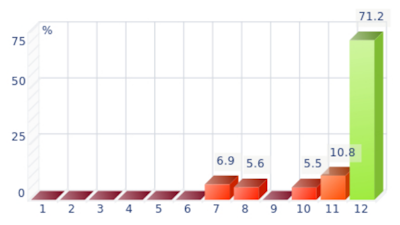
Dominant houses diagram for Queen Victoria
In Victoria's chart, the dominant 12th house therefore illustrates a paradoxical form of power. Her destiny is immense, visible, and collective, yet it rests on a closed inner life, on secret loyalties, on the solitude of rank, and on an ability to turn withdrawal into authority. This chart powerfully shows that the 12th house does not necessarily indicate social effacement. It can also point to the hidden place from which a public existence draws its gravity, coherence, and depth.
Princess Victoria of the United Kingdom


You can also consult the astrological portrait of Queen Victoria.
Below is Queen Victoria's birth chart:
Pierre Teilhard de Chardin, or the 12th House as Inner Quest, Faith, and Worldview
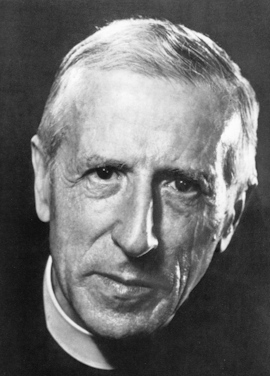
Pierre Teilhard de Chardin holds a singular place among 20th-century religious thinkers. A Jesuit, paleontologist, and theologian, he sought to connect evolution, matter, consciousness, and faith within a global vision of human becoming. His natal chart, with 54% dominant 12th house, makes him a particularly valuable example of the elevated, meditative, and spiritual side of this house.
The strength of the 12th house rests first on the presence of the Sun, Venus, Neptune, and Pluto in this sector. Identity, sensitivity, idealism, inspiration, and the relationship to deep inner transformations are thus concentrated in a zone of withdrawal, silence, and inward growth. In Teilhard de Chardin's case, this dominant does not lead to sterile self-effacement, but to a patient search for the hidden meaning of things, as if the visible world always had to be understood from a broader background.
Taurus plays an essential role in this configuration, since the Sun, Venus, Jupiter, Saturn, Neptune, and Pluto occupy this sign. This emphasis gives the 12th house a quality of grounding, fidelity, and concrete contemplation. Spirituality here does not float in pure abstraction. It is rooted in matter, nature, deep time, living forms, and scientific observation, which fits well with Teilhard's effort to unite faith and evolution.
The very tight conjunction of Venus and Neptune in the 12th house, with an orb of only 0°31, sums up one of the chart's most telling signatures. It suggests an aspiration toward unity, a mystical sensitivity, an idealization of bonds, and an ability to perceive beauty beyond immediate appearances. The Sun conjunct Neptune, then Venus, reinforces this attraction to the unseen, compassion, and the dissolution of the ordinary boundaries of the ego into a more universal understanding.
The harmonious aspects to Uranus, notably the Sun trine Uranus and those from Venus, Jupiter, and Saturn to Uranus, bring a dimension of openness, invention, and the future. The 12th house is therefore not only turned toward renunciation or inner seclusion. Here, it becomes the place of a mind ahead of its time, capable of sensing new syntheses, sometimes difficult to have accepted, yet deeply fertile.
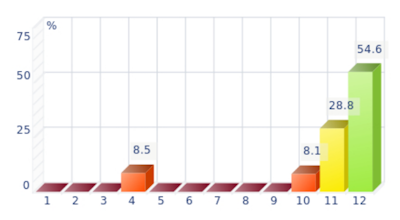
Dominant houses diagram for Pierre Teilhard de Chardin
In Teilhard de Chardin's chart, the dominant 12th house thus reveals its most constructive dimension. It is limited neither to withdrawal nor to secrecy, even though both are part of its language. It becomes a space of spiritual maturation, inner vision, and personal transcendence, where the solitude of thought serves a broader intuition of the world and humanity.
Pierre Teilhard de Chardin


You can also consult the astrological portrait of Pierre Teilhard de Chardin.
Below is Pierre Teilhard de Chardin's birth chart:
Frank Ocean, or the 12th House as Creative Secrecy, Modesty, and Inner Sovereignty

Frank Ocean has established himself as one of the most singular voices in contemporary music, between experimental R&B, introspective writing, and a highly controlled relationship with fame. His path draws even more attention because it combines strong critical recognition with an almost deliberate rarity. With 48% dominant 12th house, his chart perfectly sheds light on this way of creating from a protected, intimate space, difficult to reduce to the usual codes of public exposure.
The heart of this dominant lies in the placement of the Sun, Mercury, and Pluto in the 12th house. Identity, thought, writing, and the power of inner transformation are concentrated in a zone of secrecy, retreat, and psychic depth. In Frank Ocean's case, this configuration does not suggest absence from the scene, but rather a chosen, measured, filtered presence, as if the work had to speak louder than the visible persona.
Scorpio heightens this impression, since the Sun, Mercury, Venus, and Pluto occupy this sign, while Pluto also dominates the chart. The 12th house then takes on a more intense, magnetic, and subterranean tone. This is not merely a matter of discretion or reserve, but of a desire to preserve the intimate core, to control access to what is deep, vulnerable, or emotionally charged. Art becomes a place of indirect disclosure, where secrecy is not denied, but transposed.
The very tight Sun-Mercury conjunction in the 12th house, with an orb of only 0°42, gives a particularly eloquent signature. It closely links identity and thought in an inner space, favoring personal, allusive, sometimes fragmentary writing, where intimacy reveals itself in touches rather than through frontal declaration. The sextiles from the Sun and Mercury to Neptune add finesse of inspiration, a subtle perception of atmospheres, and an ability to make audible what usually remains diffuse.
Pluto in the 12th house, conjunct the Sun and Mercury, gives this dominant additional density. Words, silences, choices of withdrawal, and spaced-out returns are not merely a media strategy. They take part in a deeper psychic economy, in which exposure must remain compatible with self-mastery. Even Venus, placed in the 1st house and conjunct the Ascendant, does not dispel this mystery. Rather, it clothes it in quiet magnetism, sensitive presence, and a highly personal aesthetic.
The other factors in the chart nevertheless prevent this 12th house from being reduced to simple closure. Jupiter's trines to Uranus, Saturn, and the Midheaven show an ability to inscribe this singularity within a recognized, innovative, and lasting trajectory. Withdrawal does not cut him off from the world. On the contrary, it serves a freedom of rhythm, artistic independence, and a form of silent authority, far from the automatisms of constant fame.
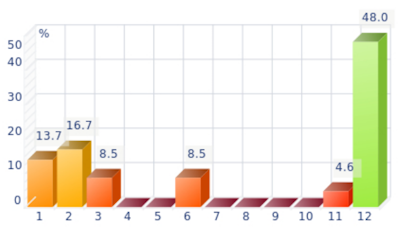
Dominant houses diagram for Frank Ocean
With Frank Ocean, the dominant 12th house appears as an art of rarity. It protects intimacy, concentrates inspiration, and turns silence into language. His chart shows that a strong 12th house can nourish a powerful public presence without giving in to permanent transparency, making secrecy not an absence, but a condition of depth and creative freedom.
Frank Ocean


You can also consult the astrological portrait of Frank Ocean.
Below is Frank Ocean's birth chart:
Arthur Conan Doyle, or the 12th House as Investigation, Imagination, and the Invisible World
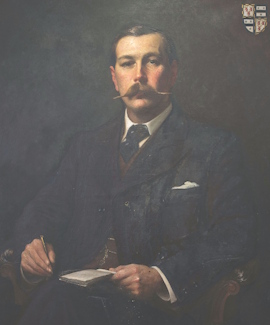
Arthur Conan Doyle remains associated with Sherlock Holmes, one of the most famous characters in detective fiction. A physician, writer, prolific storyteller, and defender of spiritualism, he offers a very interesting example of a dominant 12th house, with about 39% in his natal chart. In his case, this house is not limited to withdrawal or secrecy. It becomes a territory of exploration, where intelligence seeks to uncover what lies behind appearances.
The Sun, Mercury, Venus, Uranus, and Pluto occupy the 12th house, which remains a very significant concentration. Identity, thought, affectivity, originality, and deep forces are thus placed in a zone of background activity, mystery, and indirect perception. Such a configuration suits a creator whose work rests on clues, the unspoken, enigmas, deduction, and the gradual revelation of a hidden truth.
Mercury plays an essential role here, since it is located in the 12th house and conjunct Pluto. This conjunction gives a penetrating mind, able to dig beneath the surface, suspect what escapes ordinary sight, and organize scattered signs into a coherent logic. In Conan Doyle's universe, intelligence is never merely descriptive. It descends into the hidden zones of reality in order to extract a structure, a proof, sometimes an obsession.
The 12th house begins in Aries, and Mars, its ruler, is located in the 1st house, very close to the Ascendant. This detail noticeably changes the reading of the chart, because the energy coming from the 12th house does not remain entirely locked behind the scenes. It projects itself into the personality, action, style, and direct presence. Placed in Gemini, Mars gives mental combativeness, lively curiosity, and a verbal and narrative drive that fits well with the figure of the detective, but also with the writer able to turn the invisible into story.
Uranus and Pluto in the 12th house add a more singular dimension. Uranus, conjunct the Sun, introduces originality, sudden intuition, and a break with conventional explanations. Pluto, conjunct Mercury, pushes toward enigmas, secrets, obsessions, and buried truths. This double presence helps clarify why Conan Doyle did not merely build rational plots. His interest in spiritualism also shows a 12th house drawn to the afterlife, invisible phenomena, and the uncertain borders between reason and belief.
The aspects in the chart confirm this tension between logic and mystery. The Sun sextile Neptune gives sensitivity to inspiration and subtle worlds. Thus, the same chart that made it possible to invent Sherlock Holmes, an embodiment of method and observation, also opens the door to a more mediumistic quest, less verifiable, but deeply coherent with the 12th house.
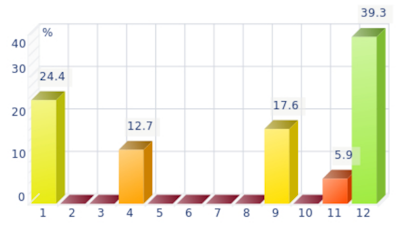
Dominant houses diagram for Arthur Conan Doyle
With Arthur Conan Doyle, the dominant 12th house takes the form of a laboratory of the hidden, but one connected to a very active 1st house. It nourishes the spirit of investigation, literary creation, attraction to secrets, and fascination with the invisible, while providing enough momentum to inscribe these materials into a work accessible to the general public. His chart shows that this house can become a driving force for intelligence and imagination, capable of giving clear form to what usually remains buried, ambiguous, or elusive.
Arthur Conan Doyle


You can also consult the astrological portrait of Arthur Conan Doyle.
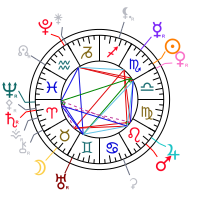
Below is Arthur Conan Doyle's birth chart:


 Title
Section
Title
Section