


 Sign In
Dominant 8th House in the Natal Chart
With the examples of John Fitzgerald Kennedy, Coco Chanel, Demi Moore, and Véronique Sanson, this article explores the dominant 8th House, one of the most complex areas of the natal chart. This house touches on crises, passions, sexuality, secrets, losses, shared money, emotional or material dependencies, and deep transformations. It describes experiences that leave no one unchanged, those that shift familiar reference points and force the individual to discover inner resources that may not always have been suspected.
The 8th House first corresponds to threshold passages. It comes into play when life confronts us with a rupture, the end of a cycle, a loss of control, or a situation that calls for a radical reorientation of one's whole being. This does not necessarily involve spectacular or tragic events, even though this house can indeed be their stage. Above all, it describes the way a person goes through moments when the old balance is no longer enough. A dominant 8th House often gives an acute awareness of the instability of things, of the fragility of possessions, attachments, and sometimes of existence itself.
This house is linked to resources that come from others. It concerns inheritances, gifts, debts, loans, insurance, financial investments, lawsuits, compensation, pensions, family or marital fortunes, as well as all forms of shared money. Whereas the 2nd House speaks more of personal means, of what we earn, own, or build for ourselves, the 8th House introduces the question of what circulates between people. It shows what is received, owed, risked, or lost, and sometimes what must be negotiated within a power dynamic.
On the emotional and intimate level, the 8th House touches on sexuality, desire, fusion, and vulnerability. It does not merely describe physical attraction, for it reveals what is at stake when two people agree to cross their defenses and expose themselves to one another. Passions belonging to this house can be powerful, magnetic, sometimes destabilizing, because they involve trust, fear of loss, jealousy, possessiveness, or the need to surrender without a mask. When the 8th House dominates, important relationships rarely take a lukewarm form. They often become revelations, trials, initiations, or engines of metamorphosis.
The 8th House also governs secrets, hidden truths, shadow areas, and buried psychological mechanisms. It gives access to the forces working beneath the surface, from impulses to traumas, from dependencies to family taboos, all the way to situations one would rather keep at a distance. It may foster an interest in psychology, psychoanalysis, investigation, research, esotericism, or disciplines that seek to understand the invisible behind appearances. With an important 8th House, the person may possess penetrating intuition, an ability to perceive flaws, secret desires, and power dynamics that escape a more superficial gaze.
By analogy with Scorpio and, in modern astrology, with Pluto, the 8th House speaks of intensity, lucidity, crisis, and regeneration. It may draw the native toward extreme experiences, deep questions, all-or-nothing relationships, and situations in which what is essential is at stake. Such an emphasis can create a magnetic, resilient, passionate, secretive temperament, capable of rising again after difficult periods. Its more delicate side appears if the fear of loss leads to control, if desire becomes possessive, if mistrust prevents surrender, or if crises keep repeating for lack of genuine transformation.
When lived constructively, the dominant 8th House gives remarkable inner strength. It teaches one not to flee difficult realities, to face renunciation, emptiness, anxiety, dependency, or the darker dimension of human experience. It can turn a wound into creative force, a crisis into rebirth, a passion into deeper self-knowledge. It does not promise a simple existence, but it often gives the ability to go through trials with rare intensity, then to extract from them a form of truth, maturity, and inner authority.
Note: this page is devoted specifically to astrological dominance and is not intended as a full psychological analysis of the individuals discussed. For more detailed studies, see the celebrity articles section.
John Fitzgerald Kennedy, or the 8th House as Power, Secrets, and Tragic Destiny

John Fitzgerald Kennedy, born on May 29, 1917 in Brookline, Massachusetts, remains one of the major political figures of the 20th century. Elected President of the United States in 1960, he embodies the prestige of a dynasty, the charm of an era, the tensions of the Cold War, and the shadowy side attached to power. His assassination in Dallas, on November 22, 1963, fixed his destiny in a collective memory marked by mystery, violence, and hypotheses that have never been fully laid to rest. With a dominant 8th House, his natal chart strikingly concentrates the themes of power, secrets, family money, sexuality, danger, and death.
In his chart, the 8th House reaches 53.8% of dominance, an exceptional score. It receives the Sun, Mercury, Venus, Mars, and Jupiter, namely half of the traditional and personal planets in the chart. Such a concentration shows a life traversed by issues that go beyond simple individual self-assertion. Success, seduction, strategic intelligence, and action unfold in a field where everything involves power struggles, hidden alliances, shared resources, and a constant confrontation with risk.
The cusp of the 8th House is in Taurus, a sign associated with possession, tangible stability, the body, values, and concrete power. In Kennedy's case, this coloring immediately evokes the weight of the family fortune, the clan inheritance, financial backing, and material securities that supported his political rise. The 8th House does not describe only personal money here, but what circulates through a lineage, a name, a network of interests, and a social belonging. It also sheds light on the attachment to pleasures, sensuality, and a form of physical magnetism that contributes to his legend. The rulership confirms this orientation: Venus, ruler of the 8th House in Taurus, is itself in the 8th House. The themes of shared money, seduction, alliances, and inherited resources are thus brought back to the very heart of the sector Venus rules.
The stellium formed by Mercury, Mars, and Jupiter in Taurus in the 8th House is particularly telling. Mercury gives a sense of negotiation, useful information, calculation, and confidential communications. Mars adds fighting spirit, a taste for challenge, and the ability to act in tense contexts. Jupiter amplifies ambition, social opportunity, and the support of well-placed backers. Their proximity creates a dense, effective, strategic energy, capable of turning available resources into a lever of influence. In the 8th House, this configuration can also indicate that important decisions are rarely made in full daylight, but in the corridors of power, through alliances, symbolic debts, or implicit commitments.
The squares from Mercury and Mars to Uranus in Aquarius introduce a major tension. They connect the 8th House stellium with rupture, the unexpected, accident, the electric charge of collective events, and abrupt turns. In this context, Jupiter in the 8th House amplifies ambition, social scope, and the scale of the issues involved, while the Uranus-Midheaven quincunx, exact to within a few minutes of arc, further reinforces the idea of a public shock irreversibly altering the trajectory.
The Sun and Venus in Gemini in the 8th House give the character his charm, mental mobility, seductive aura, and taste for contact. The Sun in the 8th places identity at the heart of deep, often invisible issues, while Venus in the 8th adds a power of emotional and sexual fascination. The wide conjunction between these two planets does not lessen this tone, because it links the solar image to a form of seduction that is troubled, brilliant, multiple, and sometimes elusive. The many stories about his private life, his liaisons, notably the one attributed to him with Marilyn Monroe, and the secrets around his intimacy resonate strongly with this emphasis.
Kennedy's public destiny, however, cannot be reduced to the 8th House. Saturn and Neptune, both dominant and linked to the Midheaven in Cancer, add a collective, mythical, and sacrificial dimension. Saturn conjunct the Midheaven evokes the burden of power, historical responsibility, the weight of family and office. Neptune close to the same axis contributes to the idealization of the figure, to his almost legendary aura, but also to the fog surrounding his public life and his disappearance. This combination explains why Kennedy belongs less to mere political chronicle than to a still-active national mythology.
The quincunxes from Mercury and Mars to the Ascendant complete this reading. They reveal a tension between the visible image, marked by elegance, a smile, and social mastery, and the more intense forces of the 8th House. What Kennedy shows the world does not entirely coincide with what acts in depth. The chart seems divided between the diplomatic appearance of the Libra Ascendant, the securities of Taurus, the liveliness of Gemini, and the pressure of an exceptionally occupied 8th House. This dissociation gives a seductive yet hard-to-grasp personality, whose public destiny was built on a mixture of media light and areas that remained obscure.
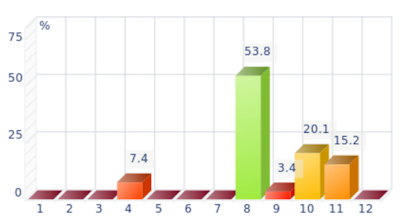
Dominant houses diagram for John Fitzgerald Kennedy
In Kennedy's case, the dominant 8th House therefore takes on rare magnitude. It does not manifest only through violent death, even though this marked his image forever. It acts throughout his entire path, through the weight of a dynasty, family resources, sexuality, state secrets, international crises, hidden rivalries, and the lasting fascination his destiny continues to exert. His chart shows an 8th House that is political, carnal, financial, and tragic all at once, where power becomes inseparable from mystery and vulnerability.
John Fitzgerald Kennedy


You can also consult the astrological portrait of John Fitzgerald Kennedy.
Below is John Fitzgerald Kennedy's birth chart:
Coco Chanel, or the 8th House as Metamorphosis, Transgression, and Authority
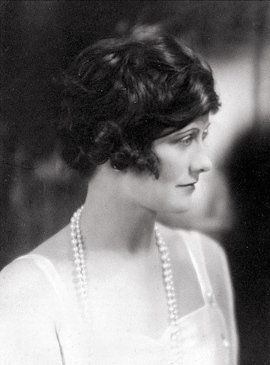
Coco Chanel, born on August 19, 1883 in Saumur, profoundly transformed 20th-century fashion by imposing a sober, mobile, and modern elegance, far removed from the clothing constraints of her time. A creative genius, a formidable businesswoman, and a figure surrounded by legends, she built a trajectory in which social ascent, money, secrets, influential relationships, and biographical ambiguities occupy an essential place. Her dominant 8th House sheds light on this ability to rise again from a difficult background, to appropriate the codes of power, and to turn ruptures into style.
With 44.8% of dominance, the 8th House comes first among the most important houses in her chart. It receives the Sun, Mercury, Venus, and Uranus, concentrating identity, intelligence, charm, aesthetic taste, and independence in this sector. This configuration does not merely describe a personality drawn to intense situations. It shows a woman whose success comes through the transformation of available resources, the support of decisive encounters, social alliances, and an instinctive understanding of what gives access to power.
The 8th House begins in Leo, a sign that lends this dominant house a proud, creative, and sovereign expression. Chanel does not merely go through crises or initial lacks. She turns them into authority, into a personal signature, into an immediately recognizable style. The Sun and Venus in the 8th House accentuate this radiant force arising from intimate, sometimes painful, but mastered material. Seduction becomes here an instrument of social ascent, while the public image takes on an almost mythical intensity. Moreover, the Sun, ruler of the 8th House in Leo, is itself in this house. Identity, radiance, and will are therefore brought directly back to the mechanisms of transformation, authority, and recomposition specific to the 8th House.
Mercury and Uranus in Virgo in the 8th House introduce a distinct tone, more precise, technical, and incisive. In her case, modernity is not gratuitous eccentricity, but radical simplification. She observes, strips down, adjusts, removes the unnecessary, and imposes a new grammar of clothing through a sober transgression of the feminine codes of her era. The wide conjunction between Mercury and Uranus points to a reforming intelligence, capable of grasping before others what had to be undone in order to liberate the body and movement.
The challenging aspects give this 8th House a darker density. The Sun-Pluto square and the Sun-Neptune square create a tension between self-assertion, mystery, idealization, and troubled areas. The Venus-Neptune square adds a share of illusion, fascination, and emotional complexity, while the Mercury-Saturn square suggests mental toughness, severe discipline, and perhaps speech built against lack or injury. These configurations suit a personality whose public image is brilliant, but whose path reveals silences, strategies, and contradictions.
The Moon in Pisces, opposite Mercury and square Saturn, completes the portrait with a much more intimate fragility. Behind Coco Chanel's firmness, this Moon suggests a permeable, anxious sensitivity, difficult to express directly. The dominant 8th House then seems to function as both protection and alchemy. What cannot be confessed or lived simply is transformed into mastery, form, discipline, and finally lasting influence.
The Ascendant in Sagittarius further broadens this trajectory. It gives boldness, a taste for freedom, the ability to cross social barriers, and the drive to aim beyond one's original background. Mars opposite the Ascendant and trine the Midheaven indicates a combative, sometimes abrupt will that projects itself into the career. The 8th House nevertheless remains the main matrix of the chart, because outward expansion rests on a more secret work of survival, conquest, and transmutation of patterns of reliance.
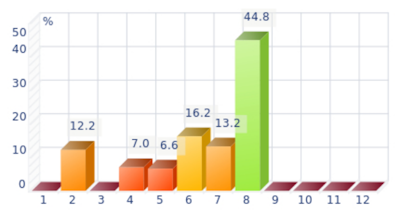
Dominant houses diagram for Coco Chanel
The dominant 8th House therefore appears here, first and foremost, not as visible drama, but as a force of recomposition. A difficult childhood, male support, useful relationships, ambiguities, money, controversial choices, and mastery of the image all belong to the same dynamic. The chart shows how a strong 8th House can transform lack into authority, shadow into style, initial dependency into personal power, and then a private story into a collective myth.
Coco Chanel
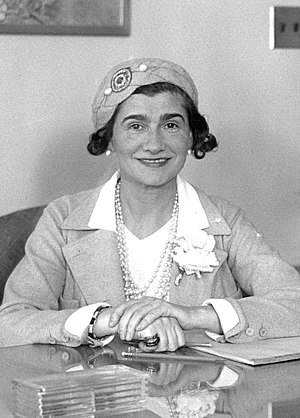


You can also consult the astrological portrait of Coco Chanel.
Below is Coco Chanel's birth chart:
Demi Moore, or the 8th House as Intensity, Vulnerability, and Rebirth
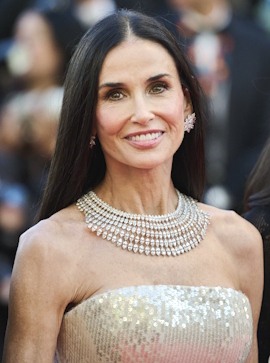
Demi Moore, born on November 11, 1962 in Roswell, New Mexico, established herself as one of the most famous American actresses of the 1990s. Revealed by St. Elmo's Fire, consecrated by Ghost, then becoming a major figure with Indecent Proposal, Disclosure, and G.I. Jane, she has often portrayed characters exposed to desire, danger, power, the gaze of others, and the transformation of the body. Her natal chart, dominated by the 8th House, strikingly matches a trajectory in which intimacy, crises, passions, vulnerability, and successive rebirths occupy a central place.
With 45.7% of dominance, the 8th House comes very clearly first in her chart. It receives the Sun, Mercury, retrograde Venus, and Neptune, all in Scorpio. This concentration gives rare psychological intensity, a very deep relationship to image, desire, loss, and transforming emotional bonds. Scorpio further accentuates this tone, since the sign naturally joins the themes of the 8th House. In Demi Moore's case, identity is not built in tranquility, but through experiences that force her to descend into the sensitive areas of existence.
The Sun conjunct Venus in the 8th House is essential for understanding her magnetism. It associates personal radiance with seduction, charm, beauty, and the power of fascination. Venus retrograde adds a more inward note, less simple than it may appear, as if the question of love, desire, and intimate value had to be regularly resumed, revisited, sometimes painfully. This astrological signature suits an actress whose public image has often been linked to the body, eroticism, age, beauty, and the way the Hollywood industry looks at women.
Demi Moore's role in Indecent Proposal resonates almost symbolically with the 8th House. The film is based on a situation in which a billionaire played by Robert Redford offers a considerable sum to a couple, portrayed by Demi Moore and Woody Harrelson, in exchange for one night with the wife. Money, sexuality, contract, temptation, moral debt, a couple put to the test, possession, and jealousy are intertwined in an almost programmatic way. Without reducing the actress to this role, it is difficult not to see in it a very pure cinematic image of the 2nd House-8th House axis.
This opposition between the 2nd House and the 8th House is particularly strong in her chart. The Moon is in Taurus in the 2nd House, facing the Sun, Venus, Mercury, and Neptune in the 8th House. It introduces the need for security, stability, possession, and bodily grounding, while the 8th House pushes toward fusion, crisis, emotional dependency, and transformation. The exact Sun-Moon opposition, within less than half a degree, shows a major inner tension between the peace being sought and the turmoil running through relationships, self-image, and intimate life.
Mercury conjunct Neptune in the 8th House brings a more troubled, imaginative, and sometimes painful dimension. The mind feeds on the invisible, the unspoken, subterranean emotion, and perceptions that are difficult to formulate. This conjunction can give powerful access to atmospheres, secret wounds, and states of vulnerability. It suits an artist capable of expressing on screen the crack under strength, the unease behind beauty, and the fragility within the icon. The Mars-Neptune square, very tight, accentuates the challenge of channeling certain tensions, between desire for action, confusion, inner struggle, and possible exhaustion.
The biography confirms this climate of crisis and reconstruction. In her memoir Inside Out, Demi Moore discussed a difficult childhood, addictions, body-image issues, emotional cracks, and the wounds of her relationships. Her love life has often been observed with intensity, from her marriage to Bruce Willis, father of her three daughters, to her more atypical union with Ashton Kutcher, much younger than herself. These episodes placed the questions of couplehood, desire, abandonment, emotional dependency, and reconstruction at the center of her public story.
The squares from Mars to Mercury, to the Sun, to Venus, and to Neptune give the chart a passionate and combative tension. Mars in the 6th House connects this intensity to effort, the body, daily constraints, work on oneself, and sometimes nervous wear and tear. This is not a contemplative 8th House, but a configuration that demands fighting with one's own wounds, transforming crisis energy into discipline, career, and physical presence. G.I. Jane, in which she imposes the image of a hardened, almost warrior-like body, illustrates in its own way this passage from vulnerability to mastery.
Bruce Willis' illness, with the announcement of his aphasia and then of his frontotemporal dementia, adds another 8th House dimension to the intimate narrative. Despite their divorce, Demi Moore has remained connected to him through their daughters, through a form of loyalty, and through a presence that goes beyond marital separation. The 8th House does not speak only of passion or rupture. It also concerns bonds that survive transformations, deep attachments, shared trials, and the ability to accompany what changes irreversibly.
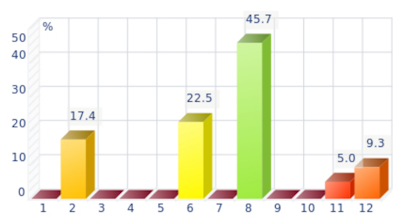
Dominant houses diagram for Demi Moore
With such a concentration in the 8th House, Demi Moore's chart shows a destiny built around the crossing of sensitive areas. The body, love, sexuality, fear of loss, ruptures, dependencies, self-image, and rebirth after crises become materials of existence as much as career issues. Her 8th House is not limited to dramatic intensity. It indicates an ability to come back, to transform, to reclaim her own story, and to make vulnerability a visible strength.
Demi Moore



You can also consult the astrological portrait of Demi Moore.
Below is Demi Moore's birth chart:
Véronique Sanson, or the 8th House as Passion, Rupture, and Reconstruction

Véronique Sanson, born on April 24, 1949 in Boulogne-Billancourt, holds a major place in French chanson. A singer-songwriter, composer, pianist, and performer of rare intensity, she has imposed an immediately recognizable style, in which musical virtuosity blends with emotional impulse, inner fire, and fierce freedom. Her career, which began brilliantly in the early 1970s, was built on exceptional talent, but also on affective bifurcations, sudden departures, personal crises, and rebirths that give her dominant 8th House a very concrete resonance.
The 8th House represents 39.8% of her chart, with the Sun, Venus, and Mars in this sector. This triple presence is enough to imprint her romantic impulses, desire, creativity, and intimate choices with an intense, rarely peaceful dimension. The Sun in the 8th House indicates an identity forged through difficult passages, in contact with ruptures and transformations. Venus brings the strength of deep passions, while Mars in Aries makes decisions more abrupt, more instinctive, sometimes irreversible. Here, to love does not simply mean to bond, but to change one's life.
Véronique Sanson's biography clearly illustrates this dynamic. Her relationship with Michel Berger, both romantic and artistic, belongs to the memory of French chanson. Yet in early 1973, she abruptly left France and moved to the United States with Stephen Stills, a member of Crosby, Stills, Nash & Young. This departure, often described as an almost lightning-like break, contains all the symbolic violence of the 8th House. One story closes, another begins, and existence shifts in a matter of hours toward a new country, a different language, an unknown environment, and a transformed destiny.
Her marriage to Stephen Stills, celebrated in 1973, opened a long American period. She gave birth to her son Christopher there in 1974 and pursued a career enriched by varied musical influences, more rock-oriented, more Anglo-Saxon, and freer as well. But this metamorphosis came at a high price. Several accounts describe a difficult relationship, marked by excess, alcohol, drugs, violence, and tensions around the separation. The 8th House is recognizable here in the interweaving of passion, uprooting, emotional dependency, fear, conflict, and reconstruction after trial.
Astrologically, the Sun conjunct Venus in the 8th House reflects this fusion between love, identity, and creation. The songs seem to arise from burning inner material, as though intimate experience had to be transposed into music. Mars in this sector adds decision, courage, tearing away, and a fighting element. The joint presence of Venus and Mars remains consistent with a passionate signature, in which desire and action answer each other. The Mercury-Pluto square accentuates the depth of language, the force of words, and the ability to convey complex emotions in a direct form.
The 8th House opens in Aries, which explains the speed of ruptures, the energy of new starts, and the refusal to endure for too long a situation that is no longer bearable. This cusp gives transformation the character of an immediate decision, almost a headlong flight, but also of survival. The Moon in Pisces in the 7th House shows a highly permeable relational sensitivity, capable of merging with the other person, vibrating intensely with them, then suffering when the bond becomes uncertain or painful. Between the need for love and the impulse to break away, the chart describes a powerful, mobile emotional life, often exposed to shocks.
Her marriage to Pierre Palmade, in 1995, adds another facet to this 8th House. The union surprised many people, because it seemed to defy usual frameworks and outside expectations. It brought together two sensitive personalities, excessive and fragile in their own ways, in a relationship where affection, loneliness, wounds, and misunderstandings probably weighed heavily. The divorce, a few years later, extended this pattern of intense bonds that are difficult to stabilize. The 8th House then manifests through attachments that cannot be simple, because they engage very deep areas of vulnerability.
The chart should not, however, be read only from the angle of crises. Véronique Sanson possesses extraordinary creative energy, an intact stage presence, musical exactingness, and a rare ability to turn pain into movement. Mars in the 8th House does not only produce ruptures. It also gives the strength to start again, to endure, to keep singing, to make the wound a vital impulse. Neptune in Libra in the 2nd House, trine the Midheaven, adds an artistic and inspired dimension to personal resources, as if the voice, the piano, and emotion became the true lasting possessions.
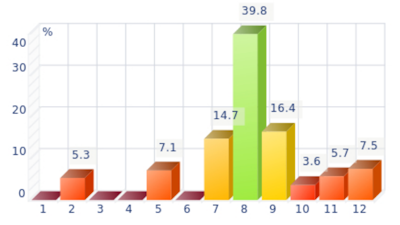
Dominant houses diagram for Véronique Sanson
In this path, the 8th House appears as a force of inner unveiling. It accompanies departures, decisive loves, losses, excesses, new beginnings, and bonds that change an existence in depth. Far from reducing Véronique Sanson to her crises, it shows instead how an artist can cross the most unstable areas of intimate life and turn them into a vibrant, free, passionate body of work, always inhabited by an energy of rebirth.
Véronique Sanson


You can also consult the astrological portrait of Véronique Sanson.
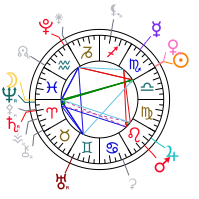
Below is Véronique Sanson's birth chart:



 Title
Section
Title
Section