Sign In
Dominant 10th House in the Natal Chart
The 10th house, sometimes referred to for convenience as the Midheaven, although the latter more precisely designates a point in the chart which most often serves as the cusp of this house depending on the house system used, plays a major role in chart interpretation, since it describes the way a destiny becomes visible in the world. In this article, we illustrate it with the examples of Vincent van Gogh, Marie Curie, Salvador Dalí, and Harrison Ford, four personalities whose vocation, career, or public radiance show how strongly this house can shape the direction of a life.
Located at the top of the chart, the 10th house represents social achievement, profession, ambition, and the role an individual may play within the community. It is not limited to one's job, even though this is often its most concrete expression. More broadly, it indicates the direction life takes when it seeks to produce a work, assume a function, gain lasting recognition, or leave an identifiable mark on the outer world.
This house also provides information about reputation, responsibilities, authority, and public image. It shows what the native builds over time, sometimes with patience, sometimes under the pressure of a powerful inner calling. When the 10th house is strongly occupied or dominant, private life can hardly remain separate from the social role, because a large part of the psychic energy is directed toward a goal, a mission, recognition, or a quest for elevation. The chart then suggests a need to confront reality, act upon the world, and give visible form to one's aspirations.
In opposition to the 4th house, which refers to roots, home, intimacy, and family inheritance, the 10th house describes the movement of ascent beyond one's original background. It speaks of what one becomes in the eyes of others, and of the way a personality separates from the initial environment in order to assume a function, a responsibility, or a status of its own. Regarding parental symbolism, its attribution varies according to different schools, some seeing the mother there, others the father; it is therefore more prudent to read it as the parent who most strongly embodies authority, demands, the social model, or the call to rise. In all cases, it brings into play a tension between intimate belonging and the need to assert oneself in the world.
In analogy with Capricorn, the 10th house evokes effort, mastery, verticality, patience, and the relationship to time. It can give a sense of stages, a taste for responsibilities, the ability to build a career, or to accept the constraints that accompany any elevated position. Yet this dimension does not always manifest in a classical or institutional form. Depending on the planets involved, it may produce a visionary artist, a recognized scientist, a media figure, a leader, a popular actor, or a person whose reputation eventually extends far beyond the private sphere.
When it is dominant in a natal chart, the 10th house often emphasizes the question of vocation. The native may be driven by the desire to reach a summit, respond to an inner demand, gain legitimacy, or publicly embody what feels essential. This dominant does not always guarantee easy or immediate success. On the contrary, it may indicate a long road, trials, hierarchical obstacles, exposure to judgment, or a lasting tension between the ideal pursued and social reality. Still, it rarely leaves the person indifferent to their path, status, or the imprint left behind.
The 10th house also has a more delicate side. When poorly lived, it may lock the person into unrealistic ambition, dependence on recognition, fear of failure, the need for control, or excessive identification with a function. It can also expose the native to criticism, public setbacks, changes in reputation, or a form of solitude at the top. Its power comes precisely from this visibility: what is at stake there does not remain entirely private. Whether it leads to glory, consecration, responsibility, or late posterity, it shows how an existence can take on the value of destiny in the eyes of the world.
Note: this article focuses specifically on astrological dominance and does not constitute a full psychological analysis of the individuals discussed. For more detailed studies, additional articles are available in the focus section.
Vincent van Gogh, or the 10th House as Absolute Vocation and Dazzling Posterity
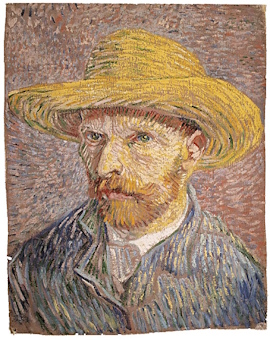
Vincent van Gogh, born on March 30, 1853 in the Netherlands, embodies one of the most striking artistic destinies in modern history. His life was marked by poverty, isolation, inner fervor, and a creative force of exceptional intensity, recognized only after his death. With a dominant 10th house at over 52%, his natal chart highlights a vocation that goes far beyond an ordinary career, becoming a mission, a public trace, and a legacy.
The heart of the chart lies in this particularly loaded 10th house. The Sun, Mercury, Venus, and Mars are gathered there, concentrating identity, thought, aesthetic sensitivity, and the impulse to act in the sector of social destiny. In Van Gogh's case, the whole being seems stretched toward a realization meant to take shape in a work, even though immediate recognition eluded him.
The 10th house begins in Pisces, a sign of vision, inspiration, compassion, and permeability to invisible forces. This tone suits an artistic calling that seeks to translate the unsayable, to give presence to emotions, light, solitude, or human suffering. In this sign, the path may seem less linear, sometimes misunderstood, yet capable of reaching a universal dimension after the fact.
Venus and Mars in the 10th house, both in Pisces, play an essential role. Their conjunction gives creation an affective and combative intensity, as though the desire for beauty and the need to act formed a single impulse. Mars, conjunct the Midheaven with an orb of 4°07, makes this vocation ardent and urgent. Venus, also conjunct the Midheaven, links public destiny to art, color, sensitivity, and the search for harmony.
The Sun and Mercury in Aries, still in the 10th house, add a more direct and willful note. The Sun emphasizes an identity seeking its path through momentum and assertion, while Mercury gives a sharp, lively, sometimes feverish mind. This Aries presence at the top of the chart contrasts with the receptivity of Pisces, and shows an artist who is inspired, fragile, and determined at the same time.
The aspects to the Midheaven underline the complexity of this destiny. Mars and Venus join it by conjunction, but the Moon and Jupiter, both in Sagittarius, challenge it by square. Their conjunction in the 6th house evokes an unstable daily life, worked by effort, emotion, and the aspiration to go beyond limits. Jupiter's square to the Midheaven amplifies the ideal, while widening the gap between inner ambition and the material conditions of recognition.
Neptune, a dominant planet in the chart, is in the 9th house and forms a wide conjunction with the Midheaven. Even with a large orb, its influence permeates the whole configuration: art becomes a spiritual quest, almost a way of praying through forms and colors. The Pisces, Sagittarius, and Aries dominants combine inner vision, faith in an ideal, and creative impulse. The 10th house transforms these forces into public destiny, far beyond what Van Gogh could know in his lifetime.

Dominant Houses Diagram for Vincent van Gogh
In Vincent van Gogh's case, the dominant 10th house thus illustrates a vocation lived as a deep necessity rather than as a strategy for success. Immediate recognition was almost absent, but the chart reveals an exceptional concentration of energy toward the top of the chart. His path reminds us that this house does not speak only of a career visible during life. It can also indicate the power of a work promised to prevail later, when personal destiny finally becomes a light for the world.
Vincent van Gogh


You can also consult the astrological portrait of Vincent van Gogh.
Below is Vincent van Gogh's birth chart:
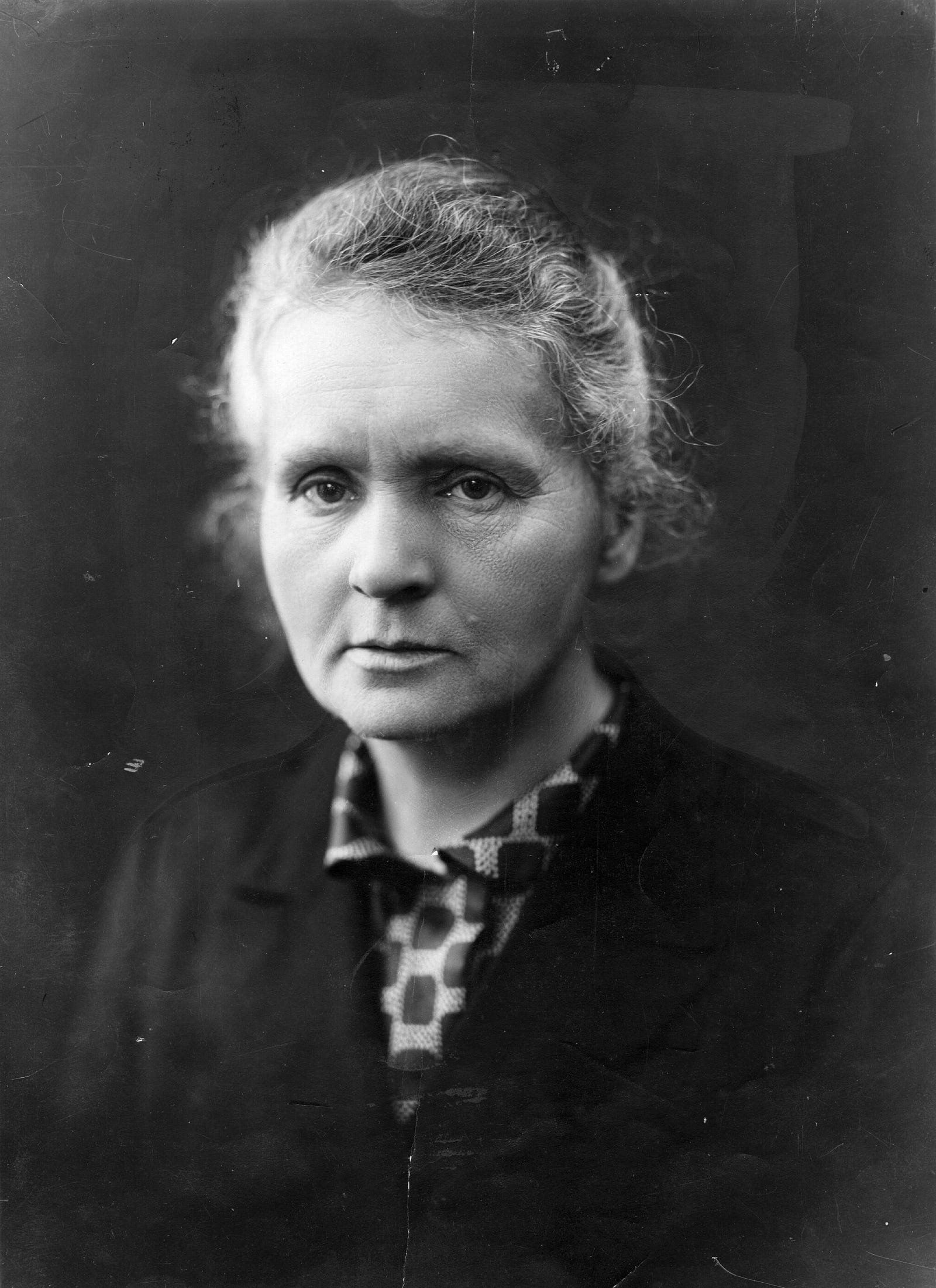
Marie Curie, or the 10th House as Scientific Rigor and Lasting Consecration
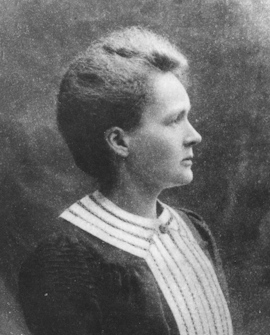
Marie Curie, born on November 7, 1867 in Warsaw, holds a unique place in the history of science. The first woman to receive a Nobel Prize, then the first person to be honored twice in two different scientific disciplines, she embodies achievement based on work, rigor, and perseverance. With a dominant 10th house at nearly 40%, her natal chart highlights a demanding vocation, oriented toward research, earned authority, and recognition reaching far beyond her own time.
The 10th house begins in Scorpio, a sign of intensity, investigation, and deep transformation. This tone is well suited to a scientific destiny connected with invisible matter, hidden forces, and discoveries capable of changing the understanding of reality. Mercury, Venus, Mars, and Saturn are located in this sector, gathering thought, ardor, perseverance, and a sense of duty at the top of the chart.
Saturn, a dominant planet, plays a central role here. Placed in the 10th house and conjunct Venus with an orb of only 0°17, it gives affection, values, and the relationship to beauty a severe, concentrated, almost ascetic form. In Marie Curie's case, this signature suggests a remarkable ability to accept discipline, deprivation, the slowness of research, and the constraints of a scientific world long dominated by men. The career is not built through ease, but through stubborn loyalty to a task.
The Sun, in the 9th house but conjunct the Midheaven, adds a broader dimension. It links identity to knowledge, higher education, foreign countries, and an intellectual quest that eventually becomes public. This configuration aptly evokes her departure from Poland, her integration into the French academic world, and her gradual access to international stature. Research, higher education, and scientific truth thus become the very foundations of recognized authority.
The chart's tensions further reinforce this impression of ordeal. The Sun opposes Pluto with a very tight orb of 0°32, while Pluto also faces the Midheaven. This double opposition gives the trajectory dramatic depth: achievement is mixed with losses, dangers, power struggles, and a constant confrontation with invisible forces. The public image is therefore not only brilliant. It also bears the mark of a life crossed by hardship and by contact with extreme realities.
Uranus, in Cancer, forms a trine to the Midheaven and to the Sun. This configuration introduces the idea of discovery, intellectual audacity, and a break with accepted limits. It sheds light on the pioneering nature of her path, but also on the fact that a woman could open a new way in a particularly closed field. With the Ascendant in Capricorn, the chart further emphasizes mastery, resistance to time, and the gradual conquest of legitimacy.

Dominant Houses Diagram for Marie Curie
In her case, the dominant 10th house does not speak of worldly brilliance or sought-after celebrity. It rather shows elevation obtained through concentration, competence, tenacity, and faithfulness to a scientific work. This example reminds us that this house can grant silent yet immense authority, born of total commitment, then consecrated by institutions, history, and collective memory.
Marie Curie


You can also consult the astrological portrait of Marie Curie.
Below is Marie Curie's birth chart:
Salvador Dalí, or the 10th House as Staged Genius and Embraced Celebrity

Salvador Dalí, born on May 11, 1904 in Spain, made his name, his face, his mustache, and his provocations an integral part of his work. A major painter of Surrealism, he did not merely produce unforgettable images. He built an immediately recognizable public persona, blending virtuosity, extravagance, humor, calculation, and a taste for spectacle. With a dominant 10th house at over 45%, his natal chart corresponds very well to this fusion of artistic creation, social visibility, and individual myth.
The 10th house begins in Aries, a sign of assertion, audacity, and initiative. It contains the Moon, Venus, and Jupiter, giving this sector considerable expressive power. Sensitivity, charm, the desire to please, and the capacity for amplification are placed at the top of the chart, in the area of reputation and recognition. In Dalí's case, public image is therefore not a mere byproduct of the career. It becomes an instrument, a stage, and almost an autonomous creation.
The Moon conjunct the Midheaven with an orb of 0°43 is one of the most telling indicators in the chart. It makes emotional life, imagination, and the relationship with the public directly visible. This configuration favors a popularity based on immediate impact, the memory of images, and the ability to capture collective attention. It can also render fame changeable, subject to reactions, admiration, or rejection. In Dalí's case, it describes with great accuracy an artist who knew how to turn his sensitivity, obsessions, and visions into a public phenomenon.
Venus in the 10th house, placed in Taurus, further reinforces the link between career, beauty, forms, and aesthetic value. This position gives a very concrete relationship to art, materials, objects, visual sensuality, and recognition through plastic quality. Jupiter in the 10th house adds breadth, confidence, and a taste for excess. It pushes the image to grow, to move beyond ordinary limits, and to conquer a wider audience. This 10th house does not seek only success, but also brilliance, expansion, and the effect produced.
The planets in the 11th house complete this pattern. The Sun, Mercury, and Mars are also in Taurus, in the sector of audiences, networks, groups, and artistic circles. The Sun conjunct Mercury and Mars shows a creative will strongly structured by ideas, gesture, and technical mastery. This very active 11th house links professional destiny to a collective movement, Surrealism, while allowing Dalí to stand apart from it through a powerful individuality. The 10th house thus receives support from a milieu, but goes beyond it through the making of a personal brand.
The tensions to the Midheaven give the public profile its disconcerting dimension. Neptune forms a very tight square to the MC, while the Moon, conjunct the Midheaven, is itself in square to Neptune. This signature accentuates the blurring between reality, dream, illusion, and representation. It can foster visionary genius, but also ambiguities, excesses, masks, and theatrical effects. Uranus, in tension with the Midheaven, adds rupture, unpredictability, and a taste for scandal. The career therefore does not follow a peaceful path, but feeds on surprise, provocation, and a very personal way of disturbing the codes.
Saturn in Aquarius, in the 8th house, forms squares to the Sun, to Mercury, and to Mars. Behind the apparent fantasy, the chart therefore contains a harder structure, made of control, strategy, and confrontation with limits. Dalí is not merely an eccentric inspired figure. His path shows a great capacity to organize his uniqueness, to endure, to impose a signature, and to transform the unusual into recognition. This combination of a brilliant 10th house, an active 11th house, and a demanding Saturn partly explains why eccentricity could become a career, then a myth established over time.

Dominant Houses Diagram for Salvador Dalí
With Salvador Dalí, the dominant 10th house takes on a spectacular and fully embraced form. It does not show only the success of a painter, but the invention of a total public presence, in which the artist, the work, the style, and the reputation eventually merge. His example illustrates one of the most visible expressions of this house: a destiny that is not content merely to be recognized, but seeks to leave a lasting mark on the collective imagination.
Salvador Dalí


You can also consult the astrological portrait of Salvador Dalí.
Below is Salvador Dalí's birth chart:
Harrison Ford, or the 10th House as an Iconic Career and Lasting Status

Harrison Ford, born on July 13, 1942 in Chicago, Illinois, belongs to that rare category of actors whose public image extends beyond the roles they played. Han Solo, Indiana Jones, and Rick Deckard helped establish an immediately identifiable presence, associated with adventure, composure, independence, and a form of understated masculinity. With a dominant 10th house at nearly 46%, his natal chart illustrates massive professional success, but also steady recognition, built without excessive display.
The 10th house begins in Cancer and receives the Sun, the Moon, Jupiter, and Pluto. This concentration is especially eloquent: identity, sensitivity, social expansion, and transformative power come together in the sector of career and reputation. The conjunction of the Sun and the Moon creates a strong unity between the private person, the projected image, and the public role. In Harrison Ford's case, fame does not seem to rest only on external performance. It is supported by an impression of coherence, familiarity, and solidity.
Jupiter in the 10th house, conjunct the Midheaven with an orb of 4°19, is one of the chart's major assets. It favors the broadening of the career, popularity, opportunities, and the ability to occupy an important place in the collective imagination. This position suits an actor who became world-famous through large-scale sagas very well. It gives the 10th house an expansive, almost mythical dimension, as though professional destiny were naturally meant to grow beyond ordinary proportions.
Mercury, in Cancer and close to the Midheaven, is still in the 9th house, but its conjunction to the MC gives particular importance to speech, movement, scripts, and characters connected with travel, exploration, or grand narratives. Its square to Neptune and to the Ascendant nevertheless shows that the public image may remain wrapped in a certain distance, mystery, or reserve. Ford never really cultivated media exuberance. His celebrity rests instead on a concise, effective, sometimes gruff, yet highly recognizable presence.
The ruler of the Ascendant, Venus, is in Gemini and in the 9th house, in an almost exact sextile with Mars in Leo. This configuration adds charm, mobility, rhythm, and an obvious sense of play. It fits well with a career made of movement, adventures, repartee, and characters blending humor, courage, and instinct. The Ascendant in Libra also brings natural elegance, restraint, and an ability to seduce without forcing the effect.
Pluto in the 10th house gives this success an additional intensity. It is not only a matter of being popular, but of leaving a lasting mark on screen through powerful roles, sometimes confronted with danger, secrecy, or transformation. Neptune conjunct the Ascendant reinforces the cinematic dimension of the public persona: the actor becomes a support for projection, a surface of identification, and an almost legendary figure. The heavily occupied 10th house channels these elements toward a career in which presence matters as much as speech.
The aspects to the Midheaven also show that this rise does not rest on a single factor. Mercury and Jupiter join it by conjunction, while Neptune challenges it by square. The career is therefore built between social luck, intelligence in the role, power of embodiment, and the blurring proper to cinema, the art of illusion par excellence. The sextile from Pluto to the Ascendant and the trines from Saturn and Uranus to the same point give resistance, control, and an ability to endure without being entirely absorbed by celebrity.

Dominant Houses Diagram for Harrison Ford
In this final example, the dominant 10th house manifests through a career that has become a collective landmark. It takes neither the tragic form of Van Gogh, nor the institutional rigor of Marie Curie, nor Dalí's provocative theatricality. It rather shows a popular, patient, and massive consecration, in which certain roles eventually merge with an era, a cinematic mythology, and a public image lastingly established.
Harrison Ford


You can also consult the astrological portrait of Harrison Ford.
Below is Harrison Ford's birth chart:



 Title
Section
Title
Section