


 Sign In
Dominant 4th House in the Natal Chart
The 4th House describes the deep foundation of the natal chart: roots, home, family, childhood, and memory. Its dominance takes very different forms in the paths of Romy Schneider, Marcel Proust, Jeff Buckley, and Émile Zola, whether through the importance of close relationships and private life, the pull of the past, questions of ancestry and the search for an anchor, or genealogy and heredity. It concerns origins, early background, and the sense of belonging to a lineage or a particular environment. It provides the emotional framework on which the individual develops and reflects a need for protection, continuity, and lasting stability. When the 4th House is especially prominent in the natal chart, issues of inheritance, bonds, and inner security tend to play a decisive role throughout existence.
The 4th House is one of the four angular sectors of the chart and is centered on the Imum Coeli (IC), the point at the bottom of the figure. Its position gives it a structural function. It concerns less what an individual reveals to others than what provides support at a deeper level. It stands opposite the 10th House, associated with vocation, status, and one's standing in society, together forming the axis between intimacy and public expression, origins and outward achievement. A powerful 4th House can therefore heighten awareness of the balance between the need for a solid inner base and the demands of the external environment. It does not necessarily lead to withdrawal, but it often gives the domestic and emotional sphere greater weight than the social image might suggest.
The conditions of early life and the atmosphere of childhood belong to this house. It provides information about attachments, inherited habits, formative memories, and patterns that may be repeated from one generation to the next. Ancestors, the surname, lineage, and, more broadly, family bonds can take on particular importance when this sector is dominant. Which parent the 4th House represents varies among astrological traditions. Some associate it with the father, others with the mother. It is more prudent to view it as describing the figure who most strongly embodies roots, continuity, protection, and memories of home. A dominant 4th House guarantees neither a happy childhood nor a harmonious domestic environment. Above all, it indicates that this sphere plays a major role in shaping the individual, through what it provides as well as through what may be lacking.
The domestic setting established in adulthood extends this symbolism. The 4th House describes the relationship to dwelling, privacy, and personal territory, from the simple need for a refuge to a deep attachment to a particular place, region, or native soil. It also encompasses real estate, inherited assets, family possessions, and material goods that may be received, preserved, or passed down. For some individuals, a dominant 4th House favors remaining in the same surroundings and maintaining a durable base; for others, chart configurations may instead bring repeated moves while leaving intact the desire to find somewhere they can finally settle. An interest in shaping the living environment may become important, although a strong 4th House alone does not imply any special attraction to ownership or success in that field.
This house also has a close connection with the past and with memory. What has been experienced, received, or passed down does not easily disappear. It may provide support, reinforce loyalty to origins, or become intimate material that the individual revisits over time. In its most constructive expressions, a dominant 4th House favors emotional richness, a sense of continuity, attachment to loved ones, and the ability to preserve a space in which to recharge. In its more problematic manifestations, it can intensify nostalgia, withdrawal, dependence on the clan, difficulty letting go of the past, or the burden of longstanding conflicts among relatives. Some people may then devote a significant part of their lives to understanding their history, healing what has been transmitted to them, or, conversely, breaking away from certain patterns in order to build greater inner stability.
A dominant 4th House must therefore be interpreted according to the planets it contains, the sign on its cusp, its ruler, and the aspects involving these different factors. A strong concentration in this sector may produce a life largely centered on home and loved ones, but it may also find expression in a body of work devoted to the past, origins, or inheritance, in a powerful need for privacy, or in repeated encounters with questions of rootedness and belonging. Its angular nature further increases its ability to shape the chart as a whole. Through the analogy between signs and houses, the 4th House is associated with Cancer and, by extension, with the Moon. It shares with them a sensitivity to bonds, protection, memory, and family continuity. However, this analogy should not lead us to confuse them. The 4th House primarily represents a sphere of experience: the private and emotional foundations from which the individual builds the rest of their life.
Note: this page is devoted specifically to astrological dominance and is not intended as a full psychological analysis of the individuals discussed. For more detailed studies, see the celebrity articles section.
Romy Schneider or the 4th House Between Heritage and Private Life
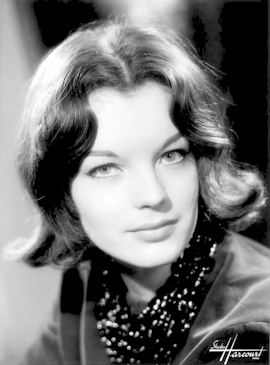
In Romy Schneider's chart, the 4th House has remarkable strength, with a dominance score of 67.61%. Born on September 23, 1938, in Vienna into a celebrated theatrical lineage, she was the daughter of performers Magda Schneider and Wolf Albach-Retty and grew up in an environment where personal ties and professional life formed a single world. Her career began in 1953, at fourteen, when she portrayed the daughter of a character played by her own mother. Two years later, Sissi brought her immense international fame. Such early success never detached the star from her family history. Her origins, emotional ties, and private life remained central to an existence in stark contrast with the radiant image of her beginnings.
The astrological configuration confirms this predominance with unusual clarity. The Sun, Moon, Mercury, Mars, and Neptune are all located in the 4th House. The Ascendant is in Cancer, and its ruler, the Moon, ranks first among the planetary dominants while itself being placed in the 4th House. The cusp of this house is in Virgo, whose ruler, Mercury, is the second planetary dominant and is also located in the same sector. Thus, two major components of the chart, the ruler of the Ascendant and the ruler of the 4th House, both lead back to roots and the private realm. Added to this is an almost exact Sun-Moon conjunction, with an orb of 0°17, also in the 4th House. Conscious identity and emotional life are therefore strongly connected with family experience.
This emphasis takes on its full meaning in light of her childhood. Her parents separated when she was still very young, and she was partly raised away from them by her grandmother, while their work commitments often kept them absent. Her mother later played a major role in launching and managing her career. Here, the 4th House therefore describes more than a simple attachment to home: it reflects a network of family ties that shaped her life from an early age and continued to influence her professional life. The Sun-Moon conjunction in Libra gives this core a strongly relational tone, but its square to the Ascendant suggests that her private history did not always integrate smoothly into the development of her identity. Even immense fame was not enough to free Romy Schneider from the weight of her attachments and emotional needs.
Her relationship with Alain Delon illustrates another aspect of this exposed and unstable private life. They met in 1958 on the set of Christine, got engaged in 1959, and Romy Schneider moved to France, distancing herself both from her original environment and from the image of the young princess that German-language cinema had imposed on her. Delon ended their relationship in 1963, after several years of a romance that had acquired legendary status, although they would later work together again, notably in La Piscine. Venus, placed in Scorpio and in the 5th House, forms a very tight opposition to Uranus, with an orb of 1°45, as well as an almost exact quincunx to Saturn. Without reducing an entire love life to these aspects alone, this combination may correspond to intense feelings marked by a strong tension between attachment, the need for freedom, and the search for stability, sometimes accompanied by abrupt changes in circumstances.
Romy Schneider nevertheless tried to build a family of her own. She married actor and director Harry Meyen in 1966 and gave birth to their son David that same year. After their divorce in 1975, she formed a new union with Daniel Biasini, with whom she had a daughter, Sarah. This need to recreate a stable environment after a childhood marked by her parents' separation fits well with the logic of such a heavily occupied 4th House. Yet this sphere also became the setting for her most painful ordeals. Harry Meyen died by suicide in 1979, and David was killed in an accident in 1981, at the age of fourteen. For a personality whose chart concentrates so much energy in the areas of home, lineage, and emotional security, these events struck the very sector that already held a central place in her psychological structure. It would be excessive to claim that tragedies of this nature could be deduced from the 4th House. What it does show, however, is how heavily private life could weigh on her inner balance.
The contrast between a brilliant career and a vulnerable personal sphere is probably one of the most striking features of her story. After being typecast at a very young age as Sissi, Romy Schneider broke away from that image to become a major dramatic actress, working with Luchino Visconti, Orson Welles, Claude Sautet, and Bertrand Tavernier and earning lasting critical recognition. Mercury in the 4th House, conjunct Neptune and in a very tight trine to Uranus, aptly reflects the ability to transform a sensitive inner world into artistic expression while refusing to remain confined to the role that those around her and the public had chosen for her. Yet these achievements never erased the other side of her existence. After David's death, she kept acting and completed La Passante du Sans-Souci before dying in Paris on May 29, 1982, at the age of forty-three. Until the end, professional recognition and personal upheaval remained inseparable.

Dominant houses diagram for Romy Schneider
Romy Schneider's chart thus provides one of the most striking examples of a dominant 4th House. Five planets are gathered there, the ruler of the Ascendant is located there and dominates the entire chart, while the ruler of the 4th House is also found in that same sector. The nearly exact conjunction of the Sun and Moon further reinforces this concentration on private life, emotional ties, and family continuity. For her, roots were at once an inheritance, a professional starting point, a source of powerful bonds, and the setting of her deepest wounds. Behind an exceptionally brilliant career and fame acquired in adolescence, the 4th House thus reminds us how profoundly her personal history, love relationships, children, and search for a home formed the true backdrop of her destiny.
Romy Schneider


You can also consult the astrological portrait of Romy Schneider.
Below is Romy Schneider's birth chart:
Marcel Proust or the 4th House Recovered Through Memory
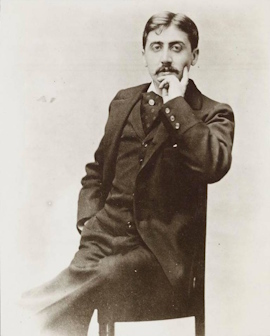
From his youth to his literary creation, the 4th House runs through the entire existence of Marcel Proust. Born on July 10, 1871, in Paris, the writer spent some summer vacations in Illiers, at the home of his uncle and aunt Amiot, a setting that would eventually inspire the Combray depicted in In Search of Lost Time. The rooms, family routines, walks, early sensations, and above all their resurgence in adulthood became essential material for his work. Memory does not merely preserve the past. It reshapes it, restores its presence, and allows an entire vanished world to come back to life. Few writers have given such literary scope to themes so directly connected with roots and inner experience.
This predominance appears very clearly in the natal chart. The Sun, Mercury, Jupiter, and Uranus are all located in the 4th House, which ranks first among the dominant houses with more than 41%. Its cusp is in Cancer, itself the leading dominant sign, and its ruler, the Moon, is in Taurus in the 1st House, linking the world of origins with the personality. Jupiter is positioned just 0°37 from the Imum Coeli, further emphasizing this angle. The Sun and Mercury also form an almost exact conjunction with an orb of 0°37, again in the 4th House. In Proust's chart, identity and thought are therefore closely associated with memory, the family environment, and the exploration of what remains buried beneath present experience.
His relationship with Jeanne Proust gives this symbolism particular resonance. Very close to her, Marcel shared a profound emotional and intellectual bond with Jeanne, traces of which can be found throughout his correspondence and his work. In Combray, the young boy's anguish as he waits for his mother's goodnight kiss is one of the novel's foundational scenes, and the madeleine brings back an entire world of places, people, and impressions associated with his early years. Proust should not be confused with his narrator, since In Search of Lost Time transposes, combines, and transforms lived experience. Yet this metamorphosis illustrates a dominant 4th House with striking clarity, as the family home ceases to be a mere memory and becomes an inner territory that writing can reconstruct.
The deaths of his parents marked a decisive break. His father, Adrien Proust, died in 1903, followed by his mother in September 1905, an event that affected him profoundly. In the aftermath, Proust withdrew from the world and made his bedroom the center of both his daily life and his creative work. At 102 Boulevard Haussmann, the walls and ceiling were covered with cork panels to reduce noise; he wrote at night, often reclining, and devoted his final years to his vast novel cycle. The home of his childhood no longer existed, but another private space became the place where the past could come alive again. Saturn, his leading planetary dominant, also forms a tight trine to the Moon, with an orb of 1°25, linking memory and sensitivity with an exceptional capacity for endurance, structure, and sustained revision.
The paradox proved creatively fruitful. From an increasingly enclosed space, Proust ultimately recreates an entire society. In Search of Lost Time encompasses families, salons, love affairs, rivalries, social transformations, art, and the passage of time, while beginning from a consciousness turned toward what it has experienced. The axis of the 4th and 10th Houses also plays a major role in the chart. Jupiter, his third planetary dominant, lies almost exactly on the Imum Coeli, while Saturn, his leading dominant, is close to the Midheaven. The movement thus runs from private foundations toward a body of work destined to achieve major public recognition. Within a Budding Grove received the Prix Goncourt in 1919. The award did not alter his way of life, and the writer remained focused on constructing and revising his manuscript until his death on November 18, 1922.

Dominant houses diagram for Marcel Proust
Everything here revolves around the same movement: leaving home, losing it, and then rebuilding it through writing. Four planets in the 4th House, Cancer ranking first among the dominant signs, its lunar ruler connected with the personality, and Jupiter almost exactly conjunct the Imum Coeli give this sector exceptional weight. The Sun-Mercury conjunction adds a remarkable coherence between intimate experience and its intellectual elaboration. In Proust's case, the 4th House thus becomes far more than family or home in the literal sense. It is the deep reservoir in which the past continues to exist and from which the writer draws the material for a body of work devoted to recovering, through memory and art, what time seemed to have carried away.
Marcel Proust


You can also consult the astrological portrait of Marcel Proust.
Below is Marcel Proust's birth chart:
Jeff Buckley or the 4th House in Search of Roots

The question of origins runs through much of the brief life of Jeff Buckley. Born on November 17, 1966, in Anaheim, California, the singer was raised by his mother, Mary Guibert, and his stepfather. His biological father, musician Tim Buckley, was largely absent from his childhood, and Jeff met him a single time, at around the age of eight, not long before Tim's death in 1975. Yet this distant paternal connection remained strongly associated with his name and career. In April 1991, his appearance in New York at a concert organized as a tribute to Tim Buckley marked his first real encounter with a New York audience. Paradoxically, a family history he had barely experienced became one of the starting points of his own artistic journey.
The natal chart gives the 4th House exceptional importance, as it exceeds 50% in the dominant houses calculation. The Sun, Mercury, Venus, and Neptune are all gathered there, all in Scorpio. Even more significantly, the Sun, Neptune, and Mercury occupy the top three positions among the planetary dominants and are therefore all located in this same sector. Identity, imagination, and thought are thus concentrated in the realm of roots, lineage, and inner life. The 4th House itself begins in Scorpio, reinforcing the intense and profound nature of this grouping. For Buckley, origins are therefore far more than a simple biographical detail. They directly affect the way he constructs his identity and seeks to determine what truly belongs to him.
This issue takes on a delicate dimension in relation to his paternal legacy. Jeff Buckley long resisted being presented as an extension of Tim Buckley and remained wary of those who tried to establish a simplistic continuity between the two musicians. For him, the 1991 concert had an intimate dimension: it was a tribute to a father he had scarcely known and whose funeral he had been unable to attend. Yet the event brought his voice and his resemblance to Tim into public view. Here, the 4th House appears in one of its most complex forms, that of a sense of belonging received without having been lived. Jeff had to contend with a name, a history, and a talent that others regarded as part of his legacy, while insisting that his music arose from his own experience.
The planetary concentration in the 4th House also sheds light on the deeply inward nature of his expression. Mercury is conjunct Neptune with an orb of 1°29 and the Sun with an orb of 1°56, while the Sun forms a conjunction with Venus with an orb of 2°18. Voice, words, sensitivity, and artistic identity are thus brought together in the same sector. Mercury's almost exact sextile to Uranus, with an orb of 0°04, adds great freedom of invention and the ability to give a personal form to a wide range of influences. After his New York beginnings, Buckley gained recognition at the Sin-é café in the East Village, then released Grace in 1994, the only studio album completed during his lifetime. His rendition of Leonard Cohen's Hallelujah would later become one of the recordings most closely associated with his name.
His connection to a stable base, however, remained marked more by movement than by permanence. Buckley grew up in different parts of Southern California and described himself as someone without a true sense of belonging. When he arrived in New York in the early 1990s, by contrast, he said that he had finally found an environment in which he felt at home. This concrete search for a lasting base illustrates the symbolism of the 4th House. Neptune, his second planetary dominant, lies in this house and forms a square to the Ascendant with an orb of 2°51. This square may make the boundaries of identity more permeable and heighten the influence of others' projections; Neptune's presence in the 4th House connects this sensitivity with origins and lineage. His accidental death by drowning in Memphis on May 29, 1997, at only thirty years old, abruptly ended this trajectory as he was preparing a second album.

Dominant houses diagram for Jeff Buckley
In this chart, the 4th House therefore takes the form less of an established home than of a search for belonging. Four planets are concentrated there, and the three leading planetary dominants continually bring the personality back to this same sector. The absent father, the inherited name, the late discovery of this paternal connection, and then the need to free himself from it give this house an expression of remarkable intensity despite the brevity of his life. Jeff Buckley transformed uncertain origins into a personal identity. His story thus shows that a dominant 4th House can be just as powerful when roots are missing or remain difficult to grasp as when they provide a stable and protective framework from childhood onward.
Jeff Buckley


You can also consult the astrological portrait of Jeff Buckley.
Below is Jeff Buckley's birth chart:
Émile Zola or the 4th House from Generation to Generation
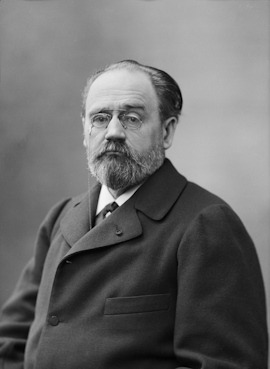
With Émile Zola, the symbolism of the 4th House finds an almost literal expression in his work. Born on April 2, 1840, in Paris, the writer spent his childhood in Aix-en-Provence, where his father, engineer François Zola, died suddenly in 1847. His death plunged the family into serious financial hardship and left a lasting mark on Zola's early years. But it was above all with the Rougon-Macquart that lineage became the center of an immense literary project. Zola set out to follow several generations of the same family under the Second Empire and to examine how character, behavior, and destiny are transmitted or transformed through the influence of environment.
The natal chart gives this orientation exceptional emphasis. The 4th House ranks first among the dominant houses with more than 62% and contains the Sun, Moon, Mercury, Mars, and Pluto. All five planets are in Aries, the leading dominant sign in the chart, while Mars, ruler of Aries, is itself placed in the 4th House and ranks first among the planetary dominants. Mercury, the third planetary dominant, is also located there. This concentration therefore connects identity, sensitivity, thought, action, and transformative power with the sphere of origins, family, and inheritance. Few charts display a 4th House of such density, so closely tied to the main dominants.
The Rougon-Macquart project gives this configuration a concrete form. As early as 1868, Zola drew up the family's genealogy and organized his cycle around several branches descending from a common ancestor. He revised this genealogical tree as his work developed, tracing the effects of heredity through characters from contrasting social backgrounds. The Moon-Pluto conjunction, with an orb of 0°45, has a striking resonance here. The Moon evokes the memory of origins and lineage, while Pluto intensifies and brings to light what operates beneath the surface, including forces that may escape conscious control. In the 4th House, their conjunction corresponds especially well to this exploration of inherited mechanisms unfolding across several generations.
Such an ambitious project required a rigorous working method. Across twenty novels published over more than two decades, Zola built an interconnected whole in which characters move from one book to another, lines of descent are tracked with precision, and each branch of the family occupies a defined place. Mercury in the 4th House is conjunct Mars with an orb of 0°49 and forms a trine to Saturn, with an orb of 0°14. Thought gains energy, consistency, and organizational strength. This discipline supports a literary work that does more than recount individual destinies: it seeks to understand how a family history continues, changes, and shapes successive generations.

Dominant houses diagram for Émile Zola
Few examples show the 4th House so clearly reflected in the very architecture of a body of work. In Zola's case, it extends beyond home and personal memories to encompass lineage, ancestors, descendants, and the presumed mechanisms of heredity. The five planets gathered in this sector and the strong presence of Aries give this exploration considerable intensity and energy. After Romy Schneider, Marcel Proust, and Jeff Buckley, Émile Zola thus offers a final expression of the 4th House: that of a writer who makes the family a subject of study and traces its branches from generation to generation.
Émile Zola


You can also consult the astrological portrait of Émile Zola.
Below is Émile Zola's birth chart:



 Title
Section
Title
Section

