


 Sign In
The Dominant Pluto: The Plutonians
This article focuses on dominant Pluto in the natal chart, that is, cases where this planet stands out as the main driving force behind the personality, destiny, or overall expression. To illustrate its different manifestations, this article draws on the charts of the Marquis de Sade, Prince, Rafael Nadal, and Björk, four very different figures, all strongly marked by Pluto.
Pluto is the most distant planet in the modern classical astrological system and undoubtedly one of the most unsettling. Its cycle is immense, lasting around 254 years, with a highly variable duration in each sign, ranging from about twelve to nearly thirty years. This slowness gives it a collective scope, yet when it dominates a chart, it operates in a deeply personal, radical, and lasting manner.
Ruler of Scorpio, often considered exalted in Pisces, Pluto points to a universe of depth, secrecy, extreme tension, and underground power. Its element remains difficult to define, but its symbolism readily evokes inner heat, lava, buried worlds, the fermentation of instincts, and everything that works in the shadows before emerging with force. It is associated with sexuality, elimination, decomposition, and regeneration.
In classical typology, dominant Pluto suggests a likely choleric temperament, by analogy with Mars, of which it can be seen as a higher octave. Characterologically, it most often corresponds to an active and primary profile, whether emotional or not, giving rise to a passionate, combative nature, driven toward action, quick reaction, and intense experience.
When Pluto becomes dominant, it colors the entire chart with a particularly strong tone. The individual does not merely live or feel but goes through experiences fully, probing, transforming, sometimes destroying, and then rebuilding. Plutonians display a remarkable ability to get to the core of things, to perceive power dynamics, hidden layers, unconscious motivations, and to refuse superficial appearances.
This dominance often produces enigmatic, magnetic, and complex individuals, both fascinating and, in rare cases, unsettling. It brings depth, a form of instinctive power, a sharp lucidity, and an uncommon survival energy. The Plutonian rarely tolerates mediocrity and seeks intensity, even if it means facing severe crises or provoking necessary turning points.
Pluto is the planet of irreversible upheavals. Its action leaves nothing untouched when it manifests strongly. It compels the abandonment of what has become sterile or unviable in order to bring forth something new on different foundations. This dynamic of death and rebirth explains its connection to the occult, hidden sciences, mystery, major psychological crises, and profound transformations.
Psychologically, dominant Pluto engages the deepest instincts, obsessions, anxieties, and contained violence, but also an exceptional capacity for transformation. This energy is not negative in itself but requires awareness and channeling. When mastered, it becomes a powerful force for transformation and creation.
The sexual function is often strongly emphasized, as Pluto intensifies desire, passion, and fusion. In its darker expressions, it may also favor excess, power struggles, or certain forms of extremity. Finally, the house occupied by Pluto points to an area of life marked by intensity, shadow, or obsession, but also by purification and renewal. When it dominates the entire chart, this dynamic permeates the whole personality, granting it a rare power, capable of both the best and the worst.
Note: this article focuses specifically on planetary dominance and does not constitute a full psychological analysis of the individuals discussed. For more detailed studies, additional articles are available in the focus section.
The Marquis de Sade, the Explorer of the Depths
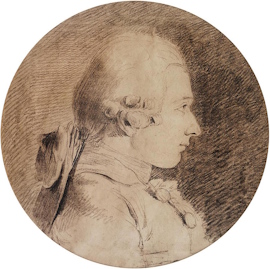
The Marquis de Sade remains one of the most controversial and fascinating figures in literary and philosophical history. A writer, thinker, and provocateur, he moved through his time by challenging moral and social norms with rare radicalism. His work, marked by the exploration of impulses, violence, and desire, reflects with exceptional intensity the presence of a dominant Pluto, where instinct, transgression, and the drive to probe the darkest areas of human nature converge.
In his chart, Pluto retrograde in Scorpio occupies a particularly significant position in the 12th house, while also being conjunct the Ascendant. This dual influence, both angular and inward, gives the planet remarkable power. It acts as a deep, often invisible driving force, directing the personality toward an unrelenting quest for raw truth, far from conventions and compromises.
The 12th house further reinforces this dimension by associating Pluto with unconscious mechanisms, buried impulses, and extreme experiences lived in the shadows. This configuration suggests a life marked by confinement, trials, and inner confrontations. The Marquis de Sade indeed spent nearly twenty-seven years of his life in detention, between prisons and asylums, illustrating this astrological signature in a striking way. This accumulation of constrained experiences not only shaped his life but also nourished a body of work in which transgression becomes a means of exploration and understanding.
The conjunction of Pluto with the Ascendant directly colors appearance, behavior, and impact on others. It creates an intense presence, at times unsettling, that does not go unnoticed. This Plutonian signature helps explain the aura of fascination and rejection he evokes, as well as the force with which he imposes his vision of the world, without seeking to soften it or make it acceptable.
Aspects involving the personal planets further reinforce this dominance. The tensions between Venus, Mars, and Saturn reflect a complex relationship to desire, constraint, and frustration. The opposition between Mercury and the Ascendant, equivalent to a conjunction with the Descendant, brings into play relationships with others and the confrontation of ideas. It suggests a mode of thinking that develops through exchange, sometimes through opposition, in response to interlocutors or an environment perceived as constraining. Squares involving the luminaries further intensify the inner tension, reflecting a deeper conflict between personal needs and external demands.
The Sun in the 8th house, together with Jupiter in the same sector, highlights the importance of experiences involving crisis, transformation, and transcendence. This house, traditionally linked to processes of symbolic death and rebirth, corresponds perfectly to the world of the Marquis de Sade, where extreme situations act as a revelation of the deepest human mechanisms.
The Moon in Virgo in the 10th house, in tension with the Sun, introduces a more analytical and lucid dimension that prevents this intensity from descending into pure chaos. It allows for distance, a nearly clinical observation of behavior, giving his work structure and coherence despite the violence of its themes.
Beyond these astrological factors, the Marquis de Sade embodies in an almost exemplary way the Plutonian logic: pushing experiences to their limits, exploring the forbidden, confronting shadow areas without compromise. This approach, unsettling yet consistent, illustrates Pluto’s capacity to reveal what is usually hidden, even if it provokes rejection or scandal.

Histogram of dominant planets for the Marquis de Sade
From a temperamental perspective, this dominant Pluto suggests an intense, passionate nature that is difficult to reconcile with established norms. Psychological functioning is characterized by strong instinctual activity, immediate reactivity, and a tendency to push experiences to their extreme limits. This configuration corresponds well to an active and primary profile, where energy unfolds with force and without restraint, in a constant confrontation with boundaries.
Marquis de Sade


You can also consult the astrological portrait of the Marquis de Sade.
Below is the Marquis de Sade's birth chart:
Prince, the Absolute Magnetism of a Singular Destiny
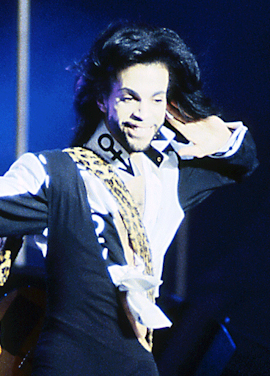
Prince, the creator of the iconic Purple Rain, became a major figure in contemporary music, as much for his artistic genius as for his unique aura. A songwriter, composer, performer, and producer, he built a world of his own, blending sensuality, mystery, and constant innovation. Behind this captivating image lies a particularly strong dominant Pluto, shedding light on his relationship to creation, power, and identity.
Pluto occupies an exceptional position here, being conjunct the Midheaven in Leo with an extremely tight orb. This configuration places the planet at the very top of the chart, directly connected to vocation, career, and public image. Such a placement gives remarkable intensity to the professional path, along with the ability to leave a lasting mark on one’s era and to exert a form of influence on the public.
Pluto in Leo further strengthens this dynamic by combining transformative power with a strong drive for personal expression and visibility. The need to create, to stand out, and to control one’s image becomes central. In Prince’s case, this translates into an almost total mastery of his artistic production, along with a clear determination to control every aspect of his work and its distribution.
The Moon in Pisces, opposed to Pluto, introduces a particularly strong inner tension. This opposition brings emotional and instinctive dimensions into play, creating a contrast between extreme sensitivity and powerful self-control. It suggests a deeply intense inner life, shaped by contradictions, where emotion fuels creation while being subjected to an ongoing process of transformation.
Mercury in Gemini, in its domicile and in square to Pluto, reinforces mental depth and the ability to explore a wide range of expressions. The mind becomes sharp and penetrating, capable of grasping hidden mechanisms and playing with codes. This configuration aligns well with a creative intelligence that does not merely reproduce but seeks to innovate, surprise, and impose its own vision.
Dominant Pluto is also expressed in the relationship with the body and sexuality, themes that are omnipresent in Prince’s work. The intensity of desire, the fusion between aesthetics and sensuality, and the ability to blur identity boundaries all reflect a fully embraced expression of this energy. Pluto operates here as a principle of transformation, allowing him to move beyond norms and explore new territories.
In addition, harmonious aspects involving Pluto, particularly with Venus and Saturn, bring a degree of control to this intensity. They help channel Plutonian power into concrete and lasting achievements. This combination partly explains the longevity and consistency of his career, as well as the sustained quality of his output.

Histogram of dominant planets for Prince
Ultimately, Prince embodies a particularly visible and accomplished expression of dominant Pluto. His trajectory illustrates this planet’s ability to transform creativity into power, to turn artistic expression into a vehicle of influence, and to impose a strong identity that is both fascinating and elusive. The entire chart converges toward this idea of controlled intensity, directed toward creation and the conquest of a unique place in the cultural landscape.
Prince (musician)
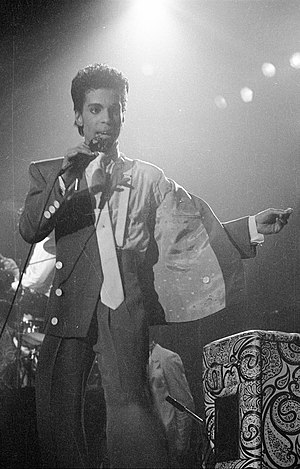


You can also consult the astrological portrait of Prince.
Below is Prince's birth chart:
Rafael Nadal, the Power of Combat and the Capacity for Regeneration
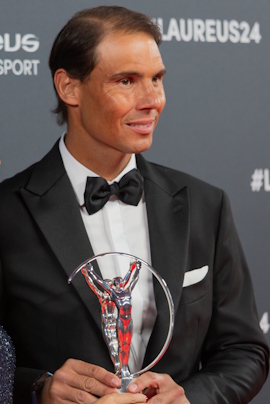
Rafael Nadal ranks among the greatest champions in the history of tennis, thanks to an extraordinary intensity and unwavering determination. His playing style, built on endurance, fighting spirit, and relentless willpower, gives the impression that he plays every point as if his life depended on it. This approach to competition clearly reflects a particularly strong dominant Pluto.
In his chart, Pluto retrograde in Scorpio occupies a leading position in the 12th house, while also being conjunct the Ascendant. This configuration gives the planet a major influence, both visible in his attitude and deeply rooted in his inner life. Scorpio, the sign ruled by Pluto, further reinforces the coherence of this dominance, giving it a direct, intense, and uncompromising expression.
The conjunction with the Ascendant immediately imprints a strong signature: physical presence, focused gaze, contained energy that is always ready to be unleashed. On the court, this influence translates into the ability to impose a power dynamic, withstand pressure, and never give in, even in the most difficult situations.
The 12th house adds a more discreet but essential dimension. It suggests a rich inner life, marked by tensions, doubts, and invisible processes of transformation. This position indicates that the real battle is often fought within, in the management of effort, pain, and personal limits. The ability to rise again after each ordeal becomes a central feature here.
The opposition between the Moon in Taurus and Pluto highlights a constant emotional tension. It reflects a need for stability confronted with powerful inner forces, requiring continuous self-overcoming. In a sporting context, this configuration fosters extraordinary resilience, as well as the ability to turn pressure into a driving force for action.
The Sun and Mercury in Gemini in the 8th house introduce a remarkable tactical intelligence, oriented toward adaptation and the management of complex situations. The 8th house, associated with crises and transformation, strengthens this ability to function under pressure, to find solutions, and to reverse unfavorable situations.
The presence of Mars in Capricorn, the sign of its exaltation, perfectly complements this dominant Pluto. It brings discipline, rigor, and a strong work ethic, allowing this intensity to be channeled into consistent and structured effort. This combination of Pluto and Mars results in controlled power, directed toward efficiency and performance.
Beyond technical considerations, Rafael Nadal’s career perfectly illustrates the Plutonian logic of regeneration. Injuries, periods of doubt, or temporary setbacks have never marked a definitive halt, but rather phases of transformation preceding an even stronger return. This capacity for constant rebuilding is one of the most visible signatures of Pluto.

Histogram of dominant planets for Rafael Nadal
In this configuration, the temperament appears intense, combative, and deeply committed. Energy is mobilized through action, with a strong ability to endure, persist, and push beyond personal limits. This active and primary profile, driven by considerable inner strength, fully reflects a dominant Pluto expressed through the body, effort, and the will to overcome adversity.
Rafael Nadal


You can also consult the astrological portrait of Rafael Nadal.
Below is Rafael Nadal's birth chart:
Björk, the Alchemist of Intense and Dreamlike Artistic Worlds
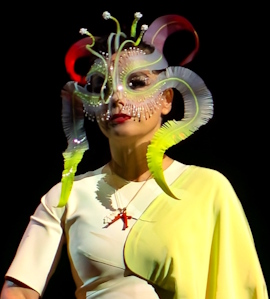
For several decades, Björk has stood out as an unclassifiable artist, a singer, composer, and creator of unique visual and sonic worlds. Her career reflects a constant drive to explore new territories, never conforming to expectations. This singularity is largely explained by a particularly strong dominant Pluto, guiding her work toward transformation, experimentation, and the expression of powerful inner forces.
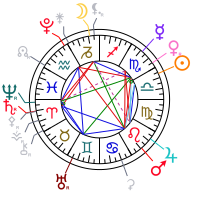
At the core of the chart, Pluto is in Virgo in the 9th house, in very tight conjunction with Uranus. This association takes on particular significance here, as Pluto rules the Ascendant, giving it a central role in the overall structure of the chart. It connects two planets of disruption and transformation, creating a dynamic of continuous renewal. Far from being limited to mere emotional intensity, this configuration pushes toward questioning established frameworks, seeking new paths, and developing a deeply personal vision of the world.
The proximity to the Midheaven further strengthens this influence, giving Pluto a direct role in vocation and public recognition. This placement favors an unconventional trajectory, where originality becomes a key factor in success. In Björk’s case, this is reflected in a career built on innovation, sonic exploration, and a constantly evolving aesthetic.
The Sun in Scorpio, a sign ruled by Pluto, reinforces the coherence of this dominance. This rulership creates a direct link between core identity and Plutonian functions, intensifying the instinctive, deep, and introspective dimension of the personality. Artistic expression then becomes a privileged means of exploring and channeling these forces.
Moreover, Mercury in Sagittarius forms a very tight square to Pluto, highlighting particularly intense mental activity. Thought is fueled by contrasts, tensions, and constant questioning, fostering a form of creativity that goes beyond traditional frameworks. This configuration aligns well with an approach to music and language as tools of exploration rather than simple means of expression.
The presence of Neptune in the 1st house, also dominant and conjunct the Ascendant, adds another layer, more fluid and intuitive. The combination of Neptune and Pluto gives rise to an artistic universe that is both deep and dreamlike, where emotions, sensations, and imagery intertwine. This pairing partly explains the distinctive atmosphere of her work, often difficult to categorize.
Harmonious aspects involving Venus, Pluto, and Uranus help channel this intensity. They allow instinctive impulses to be transformed into concrete, coherent, and aesthetically refined creations. The balance between tension and fluidity thus supports an artistic expression that is both free and controlled.

Histogram of dominant planets for Björk
In this context, dominant Pluto manifests through a personality deeply oriented toward transformation and exploration. The temperament appears both intense and creative, in constant evolution, with the ability to draw from inner resources to continually renew its expression. Björk thus embodies a form of artistic alchemy where the invisible becomes material for creation, in a process that remains faithful to the very essence of Pluto.
Björk


You can also consult the astrological portrait of Björk.
Below is Björk's birth chart:




 Title
Section
Title
Section

![[7]](http://4.bp.blogspot.com/_4iB9RenE0XI/S7ocj4CgXzI/AAAAAAAAA7s/1WXbwihcXaw/s1600/katharine%2Bhepburn.jpg)
![[8]](http://www.connecticutmag.com/Blog/Arts-Entertainment/August-2014/Katharine-Hepburn-Inspired-Performance-Venue-in-Old-Saybrook-Turns-5-in-Style/KateBacklit.jpg)