


 Sign In
The Three Modes and Mutable Flexibility
Interpreting a natal chart means first of all, as every astrology enthusiast knows, looking at where the planets are located in the zodiac signs, studying their dignity, identifying the angular houses, analyzing each planet-house connection, and paying close attention to the major aspects involving personal planets, especially the tight ones, which are the most powerful.
But this approach is far from complete, since other notions, admittedly less important, can add depth to our understanding of a personality. The hemispheres and quadrants, which reflect the distribution of the planets, the four elements, polarities, house emphasis, esoteric decans, the analysis of house rulers, planetary patterns, compound aspects, and modes, to name only some of them, all bring greater subtlety to the interpretation. In this new series of articles, we turn to the last of these categories, the cardinal, fixed, and mutable modes, beginning with the cardinal mode.
The twelve signs are divided into three groups, cardinal, fixed, and mutable, each with its own particular character. These modes are assigned according to the position of the sign within the season to which it belongs. Thus, Aries begins spring and is a cardinal sign. Virgo is the third sign of summer and is mutable, and so on.
The cardinal mode is associated with initiative, action, dynamism, momentum, impulse, and starting things. The fixed mode is about continuity, building, the desire to endure, to stabilize, to maintain a situation. The mutable mode, finally, favors adaptation, movement, improvement, and change.
No mode is “superior” to another. Every chart has its own distribution of modes, and that distribution is in itself an additional element to take into account. It works in the background, alongside the meanings supplied by the other factors.
Since there are three modes and twelve signs, beyond the general interpretation of the mode itself, we then need to look at which signs are giving it their particular nuance.
Let us see what happens with the mutable mode.
When the Mutable Mode Dominates the Chart
Following naturally from the cardinal mode, which encourages decision-making, impulse, and the desire for swift action, and the fixed mode, which reflects the wish to stabilize what already exists, the mutable mode has a different mission: to adapt, to bring about gradual change, and to prepare the transition to a new stage.
This mode favors flexibility, mobility, curiosity, responsiveness, and the ability to adjust one's behavior to circumstances, rather like a skier negotiating a field of moguls, skillfully weaving around obstacles to reach the finish as efficiently as possible.
Unlike the cardinal mode, which sets things in motion, or the fixed mode, which resists change in order to consolidate what has been achieved, here we find a willingness to work with what already exists and gradually improve it, without unnecessary disruption. Movement, handled with skill, becomes the solution.
There are nevertheless risks to this appealing talent for adaptability, especially when planets in the signs concerned receive strong challenging aspects. The result can be scattered efforts, hesitation, overly frequent changes of direction, or a tendency to be too easily influenced by others. One may then stray from one's original goals or fail to see them through.
There are nuances depending on the signs involved in the chart. Gemini brings ease in communication, curiosity, and spontaneity, Virgo seeks to improve things, analyze them, and adapt precisely to its surroundings, Sagittarius encourages enthusiasm and openness to new horizons, while Pisces stands out for its intuition, emotional flexibility, and empathy.
Let us look more closely at what this means.
The Mutable Mode in Gemini: Intellectual Adaptability
In this Air sign ruled by Mercury, mental agility, curiosity, exchanges, and communication in general are the driving forces behind intellectual activity. There is a constant need for contact and discussion with others, to explore the full range of possibilities.
Gemini brings spontaneity, humor, and lightness to social interactions, making them pleasant and easygoing.
On the negative side, there is a risk of dispersion, of spreading oneself across too many topics, of lacking the determination to examine a subject in sufficient depth, and of some instability in one's opinions. An attitude that can lead to failing to see projects through.
The Mutable Mode in Virgo: Practical Adaptability
In this Earth sign, also ruled by Mercury, the emphasis is on adapting to circumstances in practical terms and assessing them through tangible results. There is a genuine wish to refine, organize, and optimize what already exists, without turning everything upside down.
Discernment, precision, and efficiency are favored, encouraging measured, methodical action, with a constant concern for continuous improvement and a sense of service.
Among the possible obstacles of this mode is an excessive desire for perfection, which can breed dissatisfaction. By revisiting every detail, again and again, one can waste time, become absorbed in minor points, and ultimately forget what one was trying to accomplish in the first place.
The Mutable Mode in Sagittarius: Adaptability Through Discovery
In this Fire sign ruled by Jupiter, the mutable mode manifests itself through a need to broaden one's horizons, discover new worlds, and multiply experiences. Curiosity here extends to travel, foreign cultures, knowledge, and the big questions of existence. Freedom of movement is essential.
Enthusiasm, optimism, and open-mindedness make it easier to adapt to very different environments. Sagittarius knows how to learn from experience, recover from failure, and share a taste for adventure with others.
On the other hand, this thirst for discovery can lead to scattered efforts, too many projects, or unrealistic ambitions. Impatience with everyday constraints may also prompt someone to abandon an activity as soon as it loses its initial appeal.
The Mutable Mode in Pisces: Emotional Adaptability
In this Water sign, traditionally ruled by Jupiter and associated with Neptune, adaptability operates mainly on an emotional level. The great sensitivity of Pisces allows those influenced by this sign to pick up on atmospheres, sense other people's moods, and adjust their behavior to the circumstances.
Empathy, compassion, and tolerance are favored. This emotional flexibility makes it easier to understand others, forgive, and move beyond conflicts. Imagination and artistic inspiration also find fertile ground in which to flourish.
But this receptiveness can go too far, leading to mood swings, indecision, or a heightened sensitivity to external influences. The risk then is to sacrifice personal interests, retreat into daydreams when difficulties arise, or struggle to set healthy boundaries.
Note: This article focuses specifically on the dominant mode and is therefore not intended as a complete psychological analysis of the personalities selected as examples. Other articles devoted to them can be found in our Celebrity Focus section.
Ben Stiller and the Art of Changing Registers

Actor, director, screenwriter, producer, Ben Stiller has more than one string to his bow. Behind his often awkward, sometimes downright ridiculous characters is an artist capable of moving from the wild comedy of Zoolander to far more serious productions such as Escape at Dannemora or Severance. A versatility that nicely illustrates the possibilities of the mutable mode.
Nearly 82% of his chart falls under the mutable mode, with Pisces, Gemini, and Sagittarius leading the sign dominants. The Sun and Mercury are in Sagittarius, the Moon and Saturn in Pisces, in the 10th House, while Jupiter in Gemini, in the 1st House, is conjunct the Ascendant with an orb of only 2°. Uranus and Pluto occupy Virgo. All four mutable signs therefore contribute to this configuration, against a background of dominant Water and Air elements.
In astrological interpretation, the Jupiter-Ascendant conjunction favors openness and an ability to move comfortably between very different worlds. The squares from the Sun and Mercury to Saturn bring a more demanding dimension. Because behind Stiller's playful side, there is also a great deal of hard work, and a determination to perfect his craft by exploring new directions.

Chart of dominant modes for Ben Stiller
You can also read Ben Stiller's astrological portrait.
Below is Ben Stiller's birth chart.
Kesha and the Taste for Metamorphosis

With Kesha, the mutable mode takes on a more sensitive and whimsical character. First known for her festive, provocative pop music, the American singer has since explored very different styles, from rock to more intimate songs. She clearly has no intention of singing the same thing all her life. Her 2023 album Gag Order, followed by Period, released in 2025 on her own label, bear witness to this newfound freedom.
The mutable mode accounts for more than 74% of her chart, with a strong predominance of Pisces. The Sun and Mercury, in the 3rd House, along with the Moon and Jupiter, occupy this sign, while the Ascendant, Saturn, and Uranus are in Sagittarius. Two complementary expressions of the mutable principle: the sensitivity and imagination of Pisces, combined with Sagittarius' taste for exploration. Water and Earth are the leading elements.
The Moon conjunct Jupiter in Pisces emphasizes this receptiveness, while its square to Uranus, with an orb of 1°20', adds a touch of independence and unpredictability. Several harmonious aspects, notably Mercury's sextiles to Mars and Neptune, complete the picture. For Kesha, change thus seems to nourish inspiration rather than become an end in itself.

Chart of dominant modes for Kesha
You can also read Kesha's astrological portrait.
Below is Kesha's birth chart.
Christina Applegate and the Ability to Reinvent Herself
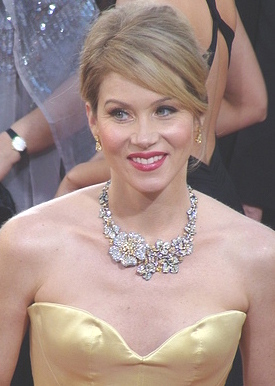
Christina Applegate's chart is a particularly striking case: the mutable mode reaches almost 94%. First finding fame at a very young age in Married... with Children, the American actress managed to move beyond Kelly Bundy, a character who could have defined her entire career. Comedies, musical theater, then darker roles such as in Dead to Me: she has shown that she can evolve without remaining trapped by her early successes.
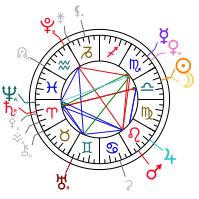
Her chart is thoroughly marked by mutable signs: Sun, Mercury, Venus, Jupiter, and Neptune in Sagittarius, Moon and Mars in Pisces, Saturn and Ascendant in Gemini, not to mention the Midheaven in Pisces. The Fire and Water elements predominate. The almost exact opposition between the Sun and Saturn, with an orb of 0°07', and the Sun's conjunction with Neptune at 0°19', introduce significant tensions. This exceptional dominance does not mean that changes always come easily, but it highlights the major role of adaptability in the astrological reading of her chart.

Chart of dominant modes for Christina Applegate
You can also read Christina Applegate's astrological portrait.
Below is Christina Applegate's birth chart.
Pascal Obispo and Creativity in Motion

Singer, songwriter for numerous performers, creator of stage shows, and even a painter, Pascal Obispo certainly has no shortage of ideas or activities. He readily moves from one project to another, writes for himself as well as for other artists, and explores different musical worlds. A diversity that corresponds rather well to his dominant mutable mode, which exceeds 84%.
His chart presents a striking configuration: Mars in Virgo, conjunct the Ascendant with an orb of 0°24', opposes the Moon in Pisces at 0°22', while Mercury and Venus, conjunct in Sagittarius, form almost exact squares to these two planets. The three mutable signs are strongly involved, right down to the four angles of the chart. This pattern suggests keen responsiveness, sometimes contradictory aspirations, but also considerable creative energy. The Sun in Capricorn, well supported by Jupiter, Uranus, and Pluto, fortunately brings a solid ability to turn ideas into reality.

Chart of dominant modes for Pascal Obispo
You can also read Pascal Obispo's astrological portrait.
Below is Pascal Obispo's birth chart.



 Title
Section
Title
Section