


 Sign In
Almost everyone knows their date of birth. Their exact birth time is another story. Some find it in an official record, while others have only their parents' vague recollection of "around eight in the morning." And many do not realize there are fairly simple ways to investigate.
In astrology, however, this information is crucial. Two people born on the same day, in the same city, but several hours or even just a few minutes apart do not have the same birth chart. Their Ascendants and houses can differ considerably, while most of their planetary positions are almost identical.
But there is a difference between a time recorded in an official document and one that is truly accurate. The subject deserves more than a simple suggestion to ask your parents. Archives, the circumstances of delivery, and calculation conventions may hold a few surprises.
Why Is Birth Time So Important?
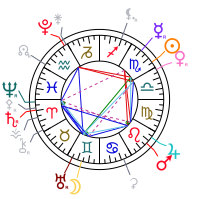
A birth chart depicts the sky for a particular place and moment. The date establishes the positions of the planets in the zodiac. The time and place also make it possible to calculate the Ascendant and the other angles, along with the twelve astrological houses.
The Ascendant is the sign rising on the eastern horizon at the moment of birth. It plays a major role in both traditional and modern interpretations of the natal chart. The Midheaven, associated in particular with social standing and career, also depends on the time. House boundaries change as the Earth rotates, potentially moving a planet from one area of life to another.
This is no minor detail. A Sun in the 12th house is not interpreted in quite the same way as a Sun in the 1st house. A planet near the Ascendant or Midheaven may acquire particular importance through its angularity. Even the assessment of dominant planets can be affected.
By contrast, a difference of a few minutes has very little effect on the zodiacal positions of most planets. It does not transform the entire chart. It primarily affects the elements that depend directly on the Earth's rotation. This distinction is essential when assessing how reliable an interpretation may be.
How Can You Find Your Birth Time?
The first place to look is usually an official birth record, although the information it contains varies considerably from one country to another.
In the United States, practices differ from state to state and according to the type of birth certificate issued. A birth time may have been recorded without appearing on the copy provided to the applicant. It may therefore be necessary to contact the state vital records office or the hospital where the birth took place.
In the United Kingdom, the situation is equally varied. In Scotland, official birth registers include the time. In England and Wales, however, it generally appears on birth certificates only in cases of multiple births, as explained in the official UK guide.
In France, anyone can obtain a free extract from the birth register, without parental details, from the town hall of the place of birth. This document includes the birth time.
In other countries, the rules and available records vary widely. When a birth certificate does not provide the time, maternity records, baby books, hospital archives, and family recollections offer other avenues. Their availability depends on the country, how long ago the birth took place, and the rules governing access to medical records. Sometimes you have to search, compare, and start again.
Since 2002, Astrotheme has requested several thousand birth certificates to document its database of public figures. This experience has shown how valuable official records can be. It also highlights something easily overlooked. A birth time's reliability depends first on where it comes from, not simply on how precisely it is written.
Is the Recorded Birth Time Always Accurate?
A birth certificate is generally the best reference available. Yet it does not guarantee absolute accuracy. The time may have been noted at the moment of birth or entered a little later. It may also have been rounded to the nearest five, ten, fifteen, or thirty minutes. An entry such as 2:00 p.m. does not mean the delivery ended at the precise second the clock displayed that hour.
Family accounts can be even harder to assess. A mother may have a vivid memory of the event but hesitate between 6:30 and 7:00 a.m. A relative may confuse the time of arrival at the hospital, the start of labor, and the birth itself. A story repeated for decades does not automatically become accurate.
There can also be transcription errors, confusion between morning and evening, or difficulties with older ways of recording time. For historical births, changes in legal time and time zones require particular care. The testimony or the birth certificate is not necessarily at fault. An incorrect time conversion alone can produce the wrong Ascendant.
Rodden Ratings and Source Reliability
To assess the reliability of birth data, American astrologer Lois Rodden devised a classification that has become a standard reference. AA applies to official records and family registers. A designates information provided by the person or their relatives, while B refers to biographies. With C, the source is vague or cannot be traced. DD (for "dirty data") indicates conflicting sources, X an unknown birth time, and XX conflicting information about the date or time of birth. Astrotheme also uses AAX when an official record or register exists but gives no birth time.
This classification primarily reflects the quality of the sources. It does not guarantee absolute precision. Even an AA-rated birth certificate may contain a rounded time or, exceptionally, an error. That is why Astrotheme displays birth data reliability ratings in the profiles of public figures in its database.
Che Guevara, an Exceptional Case
Sometimes the uncertainty goes far beyond a few minutes. The case of Che Guevara is particularly striking. His birth certificate gives June 14, 1928. Yet in his biography Che Guevara: A Revolutionary Life, published by Grove Press in 1997, Jon Lee Anderson recounts something Guevara's mother confided to an astrologer. Ernesto was reportedly born on May 14, 1928. The date was allegedly moved forward by a month to conceal the fact that his mother was already pregnant when she married.
This is testimony reported by a biographer, not conclusive documentary proof. Still, the example is striking. The difference is no longer just a question of which house a planet occupies. It even changes the Sun sign from Gemini to Taurus. An official document is a major source, not a metaphysical truth. Fortunately, such cases are extremely rare.
Special Circumstances Surrounding Birth
Not all deliveries take place under the same conditions. A quick, uncomplicated birth, a scheduled C-section, a prolonged labor, or an obstetric emergency may lead to different circumstances for recording the time. This does not mean birth times can automatically be classified as reliable or doubtful. A complicated delivery may be very well documented, while an ordinary birth may have been recorded after a delay.
In the case of a C-section, the time used in astrology is when the child is actually born, not when the mother enters the operating room or when the procedure begins. For twins or triplets, individual birth times are especially important. Even a one-minute difference can sometimes matter, particularly if the Ascendant is about to change signs or a planet lies very close to a house cusp.
What About Babies Born Prematurely?
A baby may arrive a month early, sometimes three or four months early in the most extreme cases. Should the birth chart then be calculated for the expected due date? No. In natal astrology, the convention is to use the actual date of birth, regardless of how far the pregnancy has progressed. The estimated due date does not replace the moment the child actually enters the world.
Being born prematurely does not, in itself, make the chart less reliable. A baby born very early can still have a well-documented birth time. The question of the child's biological development is separate from the moment chosen for casting the birth chart. One may wonder about the astrological significance of such an early birth, but no special calculation rule justifies shifting the date by several weeks.
But at precisely what moment is a child considered born? In astrology, the first independent breath is generally regarded as the symbolic reference point. It does not necessarily coincide with the first cry. Some astrologers instead favor complete emergence from the mother's body or the cutting of the umbilical cord, which may happen several minutes later. In France, the official birth time corresponds to the delivery of the child. In practice, astrologers use the time recorded at birth to calculate the chart, without claiming to know the exact second of the first breath.
The Consequences of an Inaccurate Birth Time
It all depends on the degree of uncertainty. A difference of two or three minutes may be negligible for much of the interpretation. It becomes more significant if the Ascendant is near a sign boundary, if a planet is right next to a house cusp, or if a calculation places particular importance on its proximity to an angle.
With fifteen or thirty minutes of uncertainty, the changes can be much more noticeable. As a rule of thumb, a four-minute difference in birth time corresponds, on average, to about one degree of movement of the Ascendant. This estimate depends, however, on the latitude and the rising sign. The cusps of the other houses may move by comparable amounts, depending on the house system used. The Midheaven shifts as well, and some planets may change houses. With a difference of one or two hours, the Ascendant can sometimes fall in a different sign.
It is important to distinguish the precision of a calculation from the accuracy of the input data. Software may display an Ascendant at 12° 37' with impeccable mathematical precision. If the time entered was invented or rounded to the nearest hour, that apparent accuracy becomes largely illusory. The result cannot be more reliable than the information used to produce it.
Aspects between the planets remain, in most cases, almost unchanged for small differences in birth time. Those involving the Ascendant or Midheaven, on the other hand, are sensitive to these differences. The Moon, which moves faster than the other astrological planets, also deserves checking when the uncertainty spans several hours, especially if it is near the beginning or end of a sign.
An imprecise birth time does not rule out all interpretation. It simply requires a clear distinction between what is reliable and what is not. This may be less spectacular than displaying certainty everywhere, but it is infinitely more serious.
Can You Interpret a Birth Chart Without Knowing the Time?
Yes, provided you set aside the elements that cannot be determined. With a birth date and place, it is still possible to study the zodiacal positions of most planets, their relationships to one another, and certain broad tendencies. On the other hand, you cannot responsibly assign an Ascendant, a Midheaven, or a distribution of houses to someone whose birth time is unknown.
Some astrology programs generate a chart for noon, the most common convention. Others use 6:00 a.m. or sunrise. These choices do not represent a presumed birth time. They are simply technical conventions for calculating planetary positions at a reference moment. Noon has the advantage of minimizing the greatest possible discrepancy from the planets' actual positions during the day, particularly the Moon's. None of these reference times, however, can establish the chart's true angles and houses. Better to leave them out than give them a misleading significance.
The Moon calls for an additional precaution. If it changes signs during the day, it would be unwise to choose either sign arbitrarily. You can check the possible positions at the beginning and end of the day, then acknowledge the uncertainty. Better to recognize two possibilities than to offer an appealing but unverifiable claim.
Birth Time Rectification
There are also rectification methods intended to recover an unknown birth time or refine an approximate one. The process usually begins with a questionnaire covering about ten significant life events, sometimes more. Marriage, divorce, the birth of a child, an important move, a career change, an accident, or the death of a loved one can serve as reference points. Dates need to be as precise as possible, and the events varied enough to avoid concentrating the entire investigation on a single area of life.
The astrologer then compares different candidate birth times. They examine in particular the transits and secondary progressions or secondary directions on the dates of the selected events. The goal is to find the time for which the astrological configurations, especially those involving the chart angles, appear to align most closely with the person's life story.
The method sounds appealing. In practice, it is far less reliable than one might imagine. Predictive techniques themselves involve interpretation, and the events studied may point to several different birth times.
If ten experienced astrologers are asked to rectify the same chart, it would not be surprising to receive ten different proposals. In the best cases, their estimates may differ by only a few minutes. But there is no guarantee of such agreement, especially when the original time is completely unknown. The choice of events, the methods used, and each practitioner's judgment inevitably influence the result.
A rectified birth time therefore does not offer the same guarantees as a time recorded at birth. The risk of fitting the chart to an already known life story is never far away. Caution is essential. A hypothesis remains a hypothesis, even when it produces a chart that seems remarkably convincing.
Conclusion
Birth time is one of the most valuable pieces of information for constructing a natal chart. It determines the Ascendant, the angles, the houses, and part of the astrological hierarchy. Finding it is worth a genuine effort, starting with civil records and the best-documented sources.
But a known birth time is not necessarily accurate to the minute. And an unknown time does not make every astrological study impossible. What matters is never confusing verified information, an approximate recollection, and a mere assumption. In astrology, as elsewhere, knowing what you do not know is already a form of precision.



 Title
Section