


 Sign In
Introduction
You can view global aspects for any day and time using the Transits application, in simple chart mode after deselecting angular aspects in the form. Positions and aspects are calculated from Monday to Sunday at 12:00 PM UT.
The orb for major planetary aspects is set at three degrees. For the true North Node and Lilith, true positions are used. Minor aspects are excluded from interpretation due to their limited influence.
Planetary aspects shape the global context, influencing politics, economics, and social trends. Lunar aspects are not included here, as their brevity makes them too fleeting for a weekly analysis.
The same applies to the North Node, Lilith, and Chiron, whose influence through aspects remains insufficiently demonstrated.
You can also view the previous weeks of this new article series.
This is not a personal horoscope but a form of mundane astrology highlighting planetary influence on a collective scale.
The week of January 19 to 25, 2026 opens with a particularly dense atmosphere, marked by an exceptional concentration of short-term aspects involving the Sun, Mercury, Venus, and Mars. The Capricorn emphasis remains very strong at the beginning of the period, with a clear focus on rigor, structure, and a sense of responsibility, before a gradual shift toward Aquarius as these planets change signs. This transition noticeably alters the collective tone, allowing demands for control to coexist with aspirations for renewal, in a context where decisions, adjustments, and repositioning multiply.
The successive passages of the Sun, Mercury, and Mars from Capricorn into Aquarius reinforce a dynamic of reorientation, in which long-established strategies are confronted with a growing need for adaptation, freedom, and a broader perspective. The many harmonious aspects with Saturn, Uranus, and Neptune support thoughtful and progressive adjustments, while the conjunctions with Pluto intensify issues related to transformation, power, and the reorganization of collective priorities. The overall climate appears both highly active and strongly demanding on mental, relational, and decision-making levels.
The Moon, moving through Aquarius, Pisces, and then Aries, accompanies this evolution by strongly modulating the emotional atmosphere. Initially more detached and observant, then more sensitive and fluctuating, it ends the week on a more direct and impulsive note. In this context, tensions observable on the collective stage can be understood as the expression of a delicate passage between older frameworks that remain structuring and new dynamics seeking to assert themselves, without the need to derive an immediate event-based interpretation.
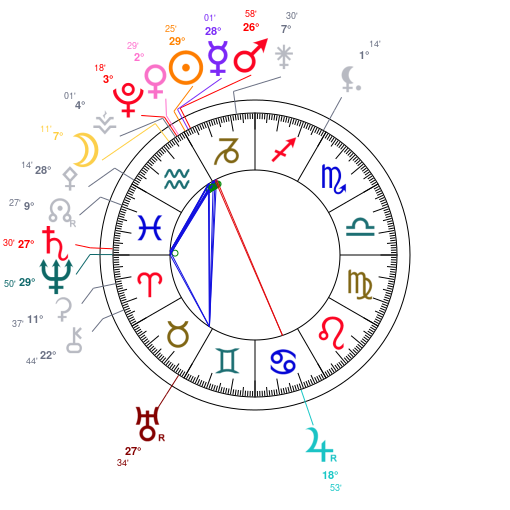
Planetary Positions and Aspects – Short-Term
Planetary Positions – Fleeting Influences
- The Sun, from 29°25' Capricorn to 5°31' Aquarius, completes its journey through Capricorn and then enters Aquarius on January 20, gradually shifting the collective climate. The final phase in Capricorn maintains a tone of seriousness, consolidation, and responsibility, favoring coherence, structure, and the pursuit of lasting results. The entry into Aquarius then introduces a stronger need for renewal, independence, and openness, with greater emphasis on ideas, collective projects, and innovative solutions.
- Mercury, from 28°01' Capricorn to 8°08' Aquarius, completes its passage through Capricorn and enters Aquarius on January 21, clearly altering the orientation of the collective mental climate. In Capricorn, thinking remains pragmatic, methodical, and focused on organization, constraint management, and concrete planning. Once in Aquarius, the mind becomes freer and more forward-looking, encouraging exchanges, networks, original reasoning, and a more detached approach, guided more by logic and principles than by caution or habit.
- Venus, from 2°29' to 10°01' Aquarius, continues its progression through Aquarius throughout the week, reinforcing a more independent and selective relational tone. Intellectual affinities, group dynamics, and the need for space become more prominent, with a search for connections based on equality and freedom. On the level of collective values, the emphasis shifts toward innovation, less conventional choices, and a more open vision of agreements, whether emotional, social, or economic.
- Mars, from 26°58' Capricorn to 1°39' Aquarius, completes its transit through Capricorn and enters Aquarius on January 23, transforming the way collective energy is expressed. In Capricorn, effort remains disciplined, strategic, and oriented toward specific goals, with an increased capacity for perseverance and structured action. The entry into Aquarius then changes the pace and motivation, favoring collective initiative, quicker decisions, experimentation, and a desire to break away from frameworks perceived as too rigid, while potentially increasing impatience with constraints.
- The Moon, from 7°11' Aquarius to 26°29' Aries, successively moves through Aquarius, Pisces, and then Aries, significantly modulating the collective emotional tone over the course of the week. In Aquarius, at the beginning of the period, it emphasizes detachment, sociability, and the need for breathing space, with reactions that are more mental than visceral. Its passage through Pisces then intensifies permeability, imagination, and sensitivity, making the atmosphere more fluctuating and empathetic. Finally, its entry into Aries reactivates momentum, spontaneity, and assertiveness, with more direct responses and a search for immediate action.
Planetary Aspects of the Week – Short-Term Climate
- The Sun (Capricorn) conjunct Venus (Aquarius) softens the collective climate while orienting it toward more open and independent values. A search for agreement emerges, balancing a sense of responsibility with a need for freedom, with a preference for clear-minded compromises rather than superficial concessions. The Sun-Venus aspect favors relational and social adjustments, in a spirit of coherence and modernization.
- The Sun (Capricorn) conjunct Mars (Capricorn) strengthens determination and the ability to sustain effort over time. The climate gains firmness and efficiency, with a clear focus on putting decisions into concrete action. The Sun-Mars aspect emphasizes discipline, strategic thinking, and structured action.
- The Sun (Capricorn) sextile Saturn (Pisces) brings a welcome sense of stability and an increased ability to take time into account. Collective orientations gain coherence, seriousness, and a stronger sense of responsibility, with better integration of constraints. The Sun-Saturn aspect supports lasting structures and carefully considered choices.
- The Sun (Capricorn) trine Uranus (Taurus) encourages pragmatic developments and innovative adjustments without abrupt disruption. The collective climate opens to new solutions that remain compatible with material realities and existing frameworks. The Sun-Uranus aspect promotes gradual reform and applied inventiveness.
- The Sun (Capricorn) sextile Neptune (Pisces) introduces a more inspired and intuitive dimension into collective decision-making. Rational clarity can be accompanied by heightened sensitivity to human, symbolic, or ideal dimensions. The Sun-Neptune aspect supports approaches that combine realism with inspiration.
- The Sun (Capricorn) conjunct Pluto (Aquarius) intensifies the perception of power dynamics and processes of transformation. The collective climate highlights what must be reoriented, reformed, or deepened, with a demand for lucidity and self-control. The Sun-Pluto aspect strengthens the will to change what is essential, favoring a radical yet structured approach.
- Mercury (Capricorn) conjunct Mars (Capricorn) intensifies mental activity, argumentative drive, and the speed of decision-making. Exchanges become more direct, sometimes sharp, with a focus on efficiency and concrete results. The Mercury-Mars aspect favors responsiveness, while requiring impatience and harshness of tone to be kept in check.
- Mercury (Capricorn) sextile Saturn (Pisces) reinforces concentration, method, and the ability to structure collective thinking. Exchanges gain seriousness and reliability, favoring experience, caution, and step-by-step logic. The Mercury-Saturn aspect supports reasoned decisions and more stable communication frameworks.
- Mercury (Capricorn) trine Uranus (Taurus) stimulates ingenuity and the ability to find concrete solutions to complex situations. The collective mental climate becomes inventive while remaining realistic, with practical ideas and applicable improvements. The Mercury-Uranus aspect favors new strategies and useful insights.
- Mercury (Capricorn) sextile Neptune (Pisces) combines logic and intuition, facilitating the understanding of subtle or implicit issues. Communication can gain nuance, imagination, and a sense of synthesis, while remaining attentive to facts. The Mercury-Neptune aspect supports a finer perception of contexts and subtle signals.
- Mercury (Capricorn) conjunct Pluto (Aquarius) adds depth to exchanges and analyses, with a tendency to get to the core of issues. The collective mental climate becomes more investigative and strategic, sometimes more uncompromising, with a search for essential truths. The Mercury-Pluto aspect supports decision-making based on decisive information, while potentially increasing polarization in discourse.
- Venus (Aquarius) sextile Neptune (Pisces) softens the relational climate and heightens sensitivity to symbolic, artistic, or ideal dimensions. Exchanges gain subtlety, inspiration, and goodwill, with greater attention to empathy and the quality of connection. The Venus-Neptune aspect favors inspired agreements and more delicate forms of rapprochement.
- Venus (Aquarius) conjunct Pluto (Aquarius) deeply intensifies emotional, social, and financial issues, placing the emphasis on the transformation of values. The collective climate reveals dynamics of power, reorientation, and decisive choices, with a more radical and lucid tone. The Venus-Pluto aspect can prompt the need to cut away, purify, or reinvent what has lost its meaning.
- Mars (Capricorn) sextile Saturn (Pisces) supports controlled, patient, and methodical action. The climate favors perseverance, discipline, and the ability to stay the course, prioritizing strategy over haste. The Mars-Saturn aspect helps consolidate, organize, and make effort more effective.
- Mars (Capricorn) trine Uranus (Taurus) energizes innovative initiatives and concrete reforms. Collective energy becomes bold while remaining pragmatic, with an ability to act quickly without losing touch with reality. The Mars-Uranus aspect favors technical decisions, material adjustments, and applied innovation.
- Mars (Capricorn) sextile Neptune (Pisces) combines action and intuition, making it possible to act with greater finesse and sensitivity to context. Inspired approaches and indirect strategies are favored, provided objectives remain clear. The Mars-Neptune aspect supports action guided by vision, while requiring care to avoid dispersion.
- Mars (Aquarius) conjunct Pluto (Aquarius) greatly intensifies collective action and the will to impose change. The climate can become more radical and more determined, with a dimension of power struggles and accelerated transformation. The Mars-Pluto aspect favors decisive actions and breakthrough dynamics, while requiring rigorous management of power and tension.
Planetary Positions and Aspects – Longer-Term
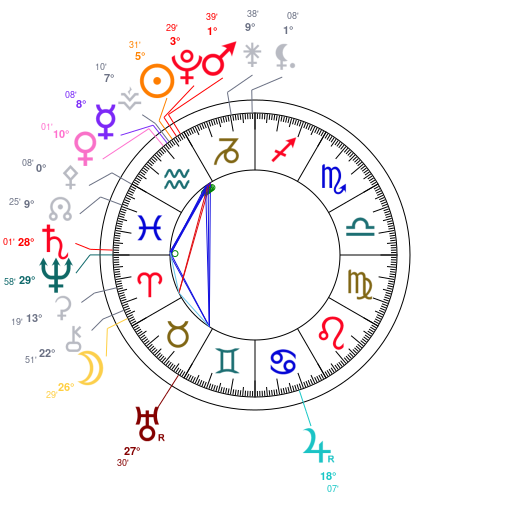
Planetary Positions – Medium-Term Climate
- Mars, from 26°58' Capricorn to 1°39' Aquarius, completes its journey through Capricorn and then enters Aquarius on January 23, noticeably altering the dynamics of collective action. In Capricorn, energy remains structured, patient, and oriented toward the methodical achievement of objectives, with a strong sense of organization and endurance. The entry into Aquarius then introduces a more independent and reform-oriented impulse, encouraging collective initiative, unconventional actions, and a desire to break away from frameworks perceived as too rigid.
- Jupiter, from 18°53'Я to 18°07'Я Cancer, continues its retrograde phase and maintains a climate of reassessment regarding the foundations of security, protection, and collective cohesion. The emphasis remains on social, family, and community needs, with a tendency to revisit existing support models. This configuration encourages consolidating what is essential rather than seeking immediate expansion.
- Lilith, from 1°14' Sagittarius to 1°08' Capricorn, moves through the final degrees of Sagittarius and then enters Capricorn on January 25, shifting the nature of the collective tensions it brings to light. In Sagittarius, the focus is on beliefs, ideologies, and truth-based narratives, often involving sharp questioning. The entry into Capricorn refocuses these themes on structures, responsibilities, and relationships to authority, revealing what resists change or needs to be reassessed within established frameworks.
Planetary Positions – Long-Term Climate
- Saturn, from 27°30' to 28°01' Pisces, moves very slowly and continues to reinforce the structuring of collective frameworks. The climate emphasizes responsibility, coherence, and the solidity of long-term commitments, with increased attention to the viability of ongoing constructions and the clarity of assumed responsibilities. This position supports a cautious and realistic approach to underlying issues.
- Uranus, from 27°34'Я to 27°30'Я Taurus, continues its gradual adjustments within material, economic, and environmental systems. Developments remain measured and sometimes barely perceptible in the short term, yet they contribute to a slow and profound transformation of collective reference points. The climate favors concrete reforms, implemented without abrupt disruption.
- Neptune, from 29°50' to 29°58' Pisces, remains on the very last degrees of the sign and spreads a climate of heightened collective sensitivity and symbolic transition. This position accentuates the gradual dissolution of old reference points while preparing a deep shift in cycle. The atmosphere may appear vague or unstable, yet it accompanies an invisible but decisive phase of maturation.
- Pluto, from 3°18' to 3°29' Aquarius, continues the installation of deep structural transformations affecting models of collective organization. Issues related to power, networks, technology, and societal change remain embedded in a long-term dynamic. The climate stays marked by a demand for reorientation and lucidity in the face of irreversible changes underway.
- Chiron, from 22°44' to 22°51' Aries, accompanies a collective process of repair linked to self-assertion, initiative, and the capacity to act. The climate highlights vulnerabilities associated with action, confidence, and identity, opening the way to a more conscious integration of these themes. This dynamic favors a clearer approach to wounds related to both personal and collective assertion.
- The True North Node, from 9°27'Я to 9°25' Pisces, completes its retrograde phase and then turns direct on January 22, marking a symbolic turning point in collective orientations. The first part of the week remains focused on assimilating the recent past, clarifying ideals, and reassessing the meaning given to events. Once direct motion resumes, directions tend to become clearer, encouraging a gradual restart of evolutionary dynamics and a better ability to project forward.
Long-Term Planetary Aspects – Enduring Trends
For the week of January 19 to 25, 2026, the sky retains the core of its enduring configurations, still dominated by the Saturn–Neptune conjunction in Pisces, which continues to reshape collective reference points. The major currents involving the slow-moving planets maintain a coherent underlying dynamic, blending realism, inspiration, and gradual adaptation, without the support of the now-inactive Jupiter–Saturn trine. The harmonious exchanges involving Uranus, Neptune, and Pluto continue to accompany gradual transformations, with a desire to modernize without rupture and to clarify in depth what needs to evolve. The overall picture forms a climate of controlled transition, rooted in the long term.
- Saturn (Pisces) sextile Uranus (Taurus) supports a gradual evolution of structures by combining continuity with pragmatic innovation. This aspect facilitates the adaptation of existing frameworks to ongoing changes and encourages controlled modernization.
- Saturn (Pisces) conjunction Neptune (Pisces) marks a phase of deep reorganization of symbolic and institutional reference points. It confronts ideals with concrete realities and seeks to give form to what had previously remained diffuse or uncertain.
- Uranus (Taurus) sextile Neptune (Pisces) links innovation and inspiration within a fluid dynamic. This aspect encourages creative solutions adapted to collective needs and supports a more flexible understanding of the transformations underway.
- Neptune (Pisces) sextile Pluto (Aquarius) acts on collective consciousness by refining the perception of shared values. It supports gradual inner transformation and the smooth integration of new social paradigms.
Conclusion
The week of January 19 to 25, 2026 comes to a close with a sense of gradual shift, following a phase of intense structuring and strong mobilization of energies. While the beginning of the period remains marked by the control, discipline, and consolidation inherited from Capricorn, the end of the week reveals a clearer dynamic of release, repositioning, and reorientation toward more collective and innovative approaches.
The configurations at the end of the week, with a Moon in Aries and the establishment of several planets in Aquarius, encourage renewed initiative and a desire to act more directly, sometimes with impatience. After the density of debates, arbitrations, and adjustments imposed by the many fast-moving aspects, a need for clarification and decisive choices emerges, in order to give clearer direction to what has been transformed or called into question.
In the background, the long-term aspects serve as a reminder that these movements are part of a much broader process of collective transformation, in which reference points are being redefined slowly yet durably. The week thus concludes with a tone of active transition, combining the demand for lucidity, the need for adaptation, and the preparation of a new cycle set to unfold progressively in the weeks ahead.


 Title
Section
Title
Section