


 Sign In
The Dominant Uranus: The Uranians
The dominance of Uranus lies at the heart of this analysis, illustrated by the birth charts of Alan Turing, Dolly Parton, Indira Gandhi, and Alexandra David-Néel. Each chart highlights, in its own way, the decisive influence of this planet in the affirmation of independence, the originality of one's path, a departure from established frameworks, and the ability to bring about profound change. These examples make it possible to observe varied expressions of Uranian dominance, sometimes creative and innovative, sometimes more destabilizing, yet never confined to a single form.
When Uranus dominates a natal chart, individualization becomes a structuring principle of the personality. A deep need emerges to stand apart, to follow a personal path, and to free oneself from imposed models. This planet symbolizes assumed difference, intellectual autonomy, and loyalty to a personal vision, even when it diverges from conventions or provokes misunderstanding.
Uranus acts as an agent of sudden change, introducing breaks with the past, unexpected turns, and periods of rapid transformation into one's life. These upheavals do not arise from chance but reflect an inner necessity for renewal and evolution. The Uranian dynamic pushes one to break away from situations that have become too restrictive or stagnant, in order to open the way to new possibilities.
Associated with progress, discoveries, and innovations, Uranus encourages the emergence of new ideas and the ability to anticipate the transformations of one's era. Often described as the higher octave of Mercury, it operates on the mental plane with great speed, conferring an inventive, intuitive, and forward-looking mind. This influence is found among inventors, pioneers, reformers, and individuals who contribute to the lasting transformation of their field.
In terms of temperament, Uranian dominance corresponds to a particularly nervous, reactive, and sensitive nature, highly responsive to intellectual and environmental stimuli. In characterology, it is associated with the emotive, active, and secondary type, suggesting a passionate personality, intensely committed to personal convictions, yet also subject to inner tensions arising from the intensity of perception. This nervous sensitivity is often accompanied by great lucidity but can also create a certain impatience with delays or constraints.
Uranian dominance is also expressed through a particular relationship to freedom, perceived as an essential and non-negotiable value. The subject tends to reject limitations considered arbitrary or incompatible with personal evolution. This independence may manifest through unconventional life choices, bold positions, or a refusal of compromises that could threaten the integrity of the personality.
Uranus nevertheless possesses a demanding nature, capable of manifesting in abrupt or unsettling ways. By symbolizing the break from established order, it generates periods of instability or radical questioning. Depending on the aspects it receives, its influence may express itself harmoniously, stimulating creativity and renewal, or more conflictually, intensifying tensions, oppositions, and unexpected changes.
Finally, Uranus is a planet of collective scope, whose action extends beyond the strictly individual level. When dominant, it frequently connects the personal destiny to broader movements, whether scientific, cultural, political, or social. It thus confers the possibility, consciously or not, of participating in the evolution of the world, by introducing new ideas, challenging established order, or embodying a principle of transformation.
Note: this article focuses specifically on the notion of planetary dominance and does not constitute a psychological analysis of the personalities used as examples. Other articles devoted to individual interpretations are available in the focus section.
Alan Turing, a Visionary Genius of Uranian Inspiration
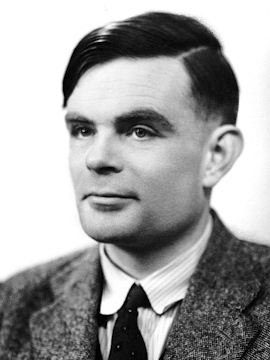
Alan Turing remains one of the most emblematic figures of scientific innovation in the 20th century. A mathematical genius, pioneer of modern computing, and decisive contributor to the decryption of German communications during World War II, he helped permanently alter the course of history. His destiny, marked both by exceptional creativity and tragic marginalization, clearly illustrates the power of Uranian dominance, associated with sudden intuition, innovative thinking, and a break from established frameworks.
In his chart, Uranus retrograde occupies a central position through its extremely tight conjunction with the Midheaven in Aquarius, within less than half a degree. Placed in the sign it rules, it fully expresses its innovative, independent, and forward-looking nature. This angular placement, at the summit of the chart, highlights the decisive role of this planet in shaping destiny and vocation. Uranus operates here with particular intensity, directing the life path toward fields related to innovation, intellectual discoveries, and technological advances. This placement perfectly corresponds to a life devoted to exploring new concepts, far ahead of its time.
The tight trine between Uranus and the Ascendant in Gemini facilitates the direct expression of this originality within the personality. Independence of mind, intellectual speed, and the aptitude for conceiving complex abstract systems emerge as natural qualities. This harmony between the core identity and the Uranian principle allows the emergence of a free mind, liberated from conventions and guided by its own logic.
The sextile between Uranus and Jupiter further strengthens this dynamic by opening the field of intellectual expansion and concrete achievements. It encourages the transformation of innovative intuitions into tangible contributions that endure over time, linking individual inspiration to a broader collective impact characteristic of major Uranian figures.
The presence of Saturn not far from the Ascendant introduces a more serious and demanding dimension, contrasting with Uranian freedom. This tension highlights the obstacles encountered in life, as well as the difficulty of fully integrating such a singular personality within a particularly rigid social framework. This duality between innovation and constraint characterizes many minds ahead of their time.
Finally, the Uranian principle manifests through the ability to profoundly alter the intellectual and technological landscape. By placing Uranus at the summit of the chart, this placement associates vocation with the introduction of new ideas and the transformation of existing structures. It fully corresponds to the symbolism of Uranus as the planet of progress, genius, and creative disruption.

Histogram of dominant planets for Alan Turing
From a temperamental perspective, one observes here an intensely nervous, receptive nature oriented toward the future. Thought develops along original pathways, often independent of existing models. This disposition stimulates invention and intuition but may also accentuate the sense of being out of step with the environment, a frequent hallmark of strongly marked Uranian dominance.
Alan Turing


You may also read the astrological portrait of Alan Turing.
Below is Alan Turing's birth chart:
Dolly Parton, Creative Independence under Uranian Influence

Dolly Parton has established herself as one of the most distinctive and influential figures in American music. Born into a modest background, she built an exceptional career by imposing a personal style that is immediately recognizable, both artistically and visually. Her path, marked by constant autonomy, remarkable inventiveness, and the ability to shape her image freely, is a clear example of Uranian dominance, associated with the freedom to be oneself and the creation of new references.
In this chart, Uranus retrograde is located in Gemini in the Tenth House, in very close conjunction with the Midheaven. This angular position gives Uranus a direct influence over vocation and public destiny. It directs the life toward activities related to personal expression, innovation, and communication. The Tenth House increases the social visibility of this planet, indicating that originality and independence are essential factors for success and recognition.
The extremely precise square between Uranus and the Ascendant in Virgo considerably strengthens the scope of this dominance. It reflects a strong individualization, perceptible from the first impression. The personality naturally stands out through its atypical character, its rejection of preexisting models, and its determination to affirm a unique identity. This tension between personal image and the Uranian principle encourages an original expression, unsettling to others, yet always authentic.
The concentration of personal planets in the Fifth House, especially the Sun, Mercury, and Venus in Capricorn, highlights creative expression and the gradual construction of a personal body of work. This combination aligns fully with the dominant presence of Uranus in the Tenth House, closely linking individual creativity with public recognition. It emphasizes the ability to transform personal inspiration into lasting success.
Uranian dominance is also expressed through the ability to anticipate developments and to renew oneself constantly. It fosters an independent vision, free from traditional constraints, allowing the pursuit of an original path. This autonomy explains the longevity and consistency of a trajectory built outside conventional models.

Histogram of Dolly Parton's dominant planets
This signature results in a vivid nervous sensitivity and a strong responsiveness to the environment. Autonomy, spontaneity, and freedom of expression are emphasized, along with a tendency to follow personal inspiration rather than preexisting models.
Dolly Parton


You may also read the astrological portrait of Dolly Parton.
Below is Dolly Parton's birth chart:
Indira Gandhi, a Destiny of Power Forged by Uranus
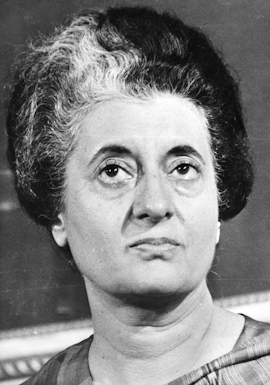
Indira Gandhi left a lasting mark on contemporary history as one of the most powerful and controversial political figures of the 20th century. As the first woman to lead India, she exercised her authority during a period of profound transformation, making bold decisions that permanently reshaped her country. Her path, marked by crises, reforms, and confrontations, closely reflects Uranian dominance, associated with rupture, independence, and the transformation of established structures.
Uranus occupies a decisive position in Aquarius, the sign it rules, in the Seventh House, and forms an extremely precise opposition to the Ascendant in Leo, with an orb of only a few arc minutes. This configuration places the Uranian principle at the very core of identity and relationships with the world. It indicates a deeply independent personality whose destiny unfolds through interactions marked by tensions, confrontations, or decisive upheavals.
The square between Uranus and the Midheaven in Taurus further strengthens this influence by directly linking the planet of sudden change to public destiny. It corresponds to a trajectory marked by unexpected events, reversals, and radical decisions. The vocation unfolds in a climate of relative instability, requiring great adaptability and unwavering determination.
The opposition between Uranus and Saturn in Leo emphasizes the constant confrontation between the principle of order and the force of transformation. This aspect reflects a tension between the need to preserve the existing order and the impulse toward profound change. It corresponds to a personality capable of challenging traditions and imposing major transformations, despite resistance.
The square between Uranus and the Sun in Scorpio reinforces the power of this dominance by directly linking personal will to Uranian energy. It is accompanied by an intense affirmation of self, sometimes inflexible, guided by an independent vision and deep determination. This aspect contributes to shaping an extraordinary destiny marked by decisive choices and periods of radical transformation.
The placement of Uranus in its domicile further amplifies its symbolic reach. It strengthens the ability to act as a vector of collective change, to introduce new ideas, and to influence the course of events over time. It corresponds to a vocation oriented toward the evolution of social and political structures.
Uranus also expresses itself through the ability to act unpredictably, to make bold decisions, and to profoundly alter the balance of established situations. It creates an inner force directed toward action and transformation, characteristic of a personality capable of playing a decisive role during pivotal periods.

Histogram of Indira Gandhi's dominant planets
The overall chart of Indira Gandhi corresponds to an energetic nature, driven by a powerful need for autonomy and control over her destiny, emphasizing initiative and personal assertion, along with the ability to confront the most difficult circumstances. It thus evokes a figure of authority capable of imposing her will and exerting a lasting influence on her environment.
Indira Gandhi


You may also read the astrological portrait of Indira Gandhi.
Below is Indira Gandhi's birth chart:
Alexandra David-Néel, an Explorer's Calling Guided by Uranian Influence
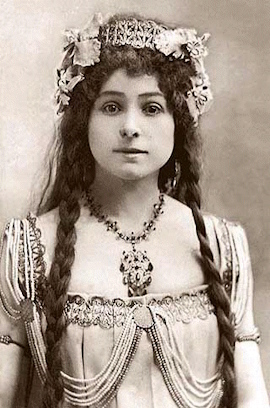
Alexandra David-Néel remains one of the great figures of exploration and spiritual discovery. A tireless traveler, writer, and orientalist, she was the first Western woman to reach Lhasa, then forbidden to foreigners. Her entire life unfolded outside the social conventions of her time, guided by an irresistible need for freedom and knowledge. This exceptional trajectory closely reflects Uranian dominance, associated with radical independence, boldness, and the will to cross boundaries.
In her natal chart, retrograde Uranus occupies a particularly significant position in Cancer, in the Tenth House, and forms a close conjunction with the Midheaven. This placement at the top of the chart directly links the Uranian principle to vocation and public destiny, consistent with a life oriented toward affirming a personal path, independent of traditional frameworks and directed toward unprecedented experiences.
The square between Uranus and the Ascendant in Libra emphasizes the deeply individualistic dimension of her personality. It reflects a constant need for autonomy and a tendency to free herself from external expectations, resulting in unconventional behavior, often out of step with social norms, yet fully aligned with her inner aspirations.
The trine between Mercury in Scorpio and Uranus strengthens intellectual abilities and openness to original forms of thought. This aspect develops curiosity, insight, and the capacity to explore unknown or inaccessible fields. It corresponds to an independent mind capable of questioning certainties and engaging in innovative research.
The very precise sextile between Venus in Virgo and Uranus brings relational flexibility that facilitates decisive encounters and enriching experiences. It encourages attraction to different environments and favors life choices based on personal freedom rather than material or social security.
The dominant position of Uranus in the Tenth House directly links personal fulfillment to the affirmation of complete freedom, indicating that vocation can only develop through independence and the refusal of limiting constraints. It corresponds to a path built around exploration, learning, and personal transformation.

Histogram of Alexandra David-Néel's dominant planets
This powerful Uranus creates a mind freed from conventional frameworks, driven by a constant quest for new experiences and understanding of the world. Her path naturally led her toward unknown territories, whether geographic, intellectual, or spiritual. This dynamic explains a life shaped by exploration, autonomy, and the constant will to transcend imposed boundaries.
Alexandra David-Néel


You may also read the astrological portrait of Alexandra David-Néel.
Below is Alexandra David-Néel's birth chart:


 Title
Section
Title
Section